


- Description
- Specifications
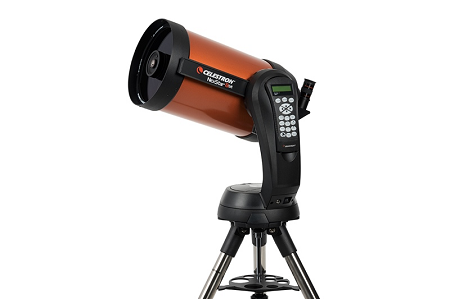
The Celestron NexStar 8SE Computerized Telescope is one of Celestron’s most recognizable 8-inch Schmidt-Cassegrain telescope systems, built for observers who want serious light-gathering power, computerized GoTo object location, and a portable single-arm fork mount in one complete package. With a 203.2mm aperture, 2032mm focal length, f/10 optical system, StarBright XLT coatings, and the NexStar+ computerized hand controller, the NexStar 8SE is designed to make visual astronomy more accessible while still offering enough aperture for impressive lunar, planetary, and deep-sky observing.
Who Is This Product Best For?
The NexStar 8SE is best for beginners who want a serious first computerized telescope, intermediate observers upgrading from a smaller manual telescope, and experienced visual astronomers who want an easy-to-transport 8-inch SCT for backyard observing, cottage trips, outreach, or club nights.
It is especially well suited to visual observers who want help finding objects in the sky. The computerized GoTo mount and NexStar+ hand controller can locate and track thousands of celestial objects, making it easier to spend more time observing and less time manually searching.
Why Choose This Telescope?
- Large 8-inch aperture: The 203.2mm optical tube gathers enough light for detailed views of the Moon, planets, globular clusters, brighter galaxies, nebulae, and double stars.
- Schmidt-Cassegrain optical design: Combines long focal length performance with a compact, portable optical tube.
- Computerized GoTo mount: The NexStar+ database includes more than 40,000 objects, helping users automatically locate and track targets.
- SkyAlign technology: Allows alignment using any three bright objects, making setup approachable even for users who are still learning the night sky.
- StarBright XLT coatings: Celestron’s high-transmission coatings improve image brightness and contrast.
- Portable single fork arm design: The optical tube, mount, and tripod break down into manageable parts for transport and setup.
- Room to grow: Compatible with many Celestron accessories, including power supplies, dew control, WiFi control, StarSense AutoAlign, camera adapters, and planetary imaging cameras.
Recommended Uses
- Visual observing of the Moon and planets
- Viewing Saturn’s rings, Jupiter’s cloud belts, and lunar detail
- Bright deep-sky objects such as globular clusters, brighter nebulae, and galaxies
- Double stars and star clusters
- Backyard astronomy and cottage observing
- Public outreach and astronomy club use
- Introductory lunar and planetary imaging with suitable accessories
Compatibility and Accessory Notes
The NexStar 8SE includes the 8-inch optical tube, computerized single fork arm mount, tripod, accessory tray, StarPointer red dot finderscope, NexStar+ hand control, 25mm eyepiece, and 1.25-inch star diagonal. It uses a CG-5 style dovetail bar and is designed around a compact Schmidt-Cassegrain optical tube.
Power is required for the computerized mount. Celestron lists power support for 8 AA batteries, which are not included, or a 12V DC power source. For reliable observing sessions, Ontario Telescope generally recommends using an appropriate external 12V power supply or battery pack rather than relying on AA batteries for extended use.
Popular optional accessories include a dew shield or dew heater ring, AC adapter or portable power supply, StarSense AutoAlign, SkyPortal WiFi module, focal reducer/corrector, T-adapter for SCTs, planetary camera, and additional eyepieces.
Important Limitations
The NexStar 8SE is excellent for visual astronomy and lunar/planetary observing, but its standard single-arm alt-azimuth mount is not the ideal choice for long-exposure deep-sky astrophotography. Short lunar and planetary imaging is a much better fit. Deep-sky imaging is possible only with realistic expectations and additional accessories such as a wedge, reducer, camera adapters, and careful setup.
The 8-inch optical tube provides impressive views, but the complete kit is larger and heavier than small beginner telescopes. Customers should also plan for proper power, dew control, and cooldown time for best performance.
Frequently Asked Questions
Is the Celestron NexStar 8SE good for beginners?
Yes. It is one of the most popular serious beginner-to-intermediate computerized telescopes because the GoTo mount helps users find objects and the 8-inch aperture provides rewarding views. It is more capable than a basic starter scope, but it does require power, alignment, and a little setup practice.
What can I see with the NexStar 8SE?
The NexStar 8SE is excellent for the Moon, Saturn, Jupiter, Mars when conditions are favourable, double stars, star clusters, globular clusters, brighter nebulae, and brighter galaxies. Under dark skies, the 8-inch aperture gives access to a wide range of deep-sky objects.
Does the NexStar 8SE find objects automatically?
Yes. After alignment, the computerized GoTo mount can automatically slew to and track objects selected through the NexStar+ hand control.
Can the NexStar 8SE be used for astrophotography?
It is best for visual observing and lunar or planetary imaging. Long-exposure deep-sky astrophotography is limited by the standard alt-azimuth mount and usually requires additional equipment, experience, and realistic expectations.
Does it need power?
Yes. The computerized mount requires power. It can use AA batteries, but for reliable observing, an external 12V power supply or astronomy battery pack is strongly recommended.
Is the NexStar 8SE portable?
Yes, for an 8-inch computerized telescope. The optical tube, single fork arm mount, and tripod separate for transport, making it practical for backyard use, cottage trips, and astronomy events.
Our Recommendation
At Ontario Telescope and Accessories, we recommend the Celestron NexStar 8SE for customers who want a powerful, easy-to-use computerized telescope with enough aperture to keep them interested for years. It is a strong choice for visual observers who want GoTo convenience, excellent lunar and planetary views, and access to brighter deep-sky objects without moving to a large Dobsonian or equatorial imaging system.
Choose the NexStar 8SE if your priority is visual observing with computerized object location. Choose a dedicated equatorial mount and imaging telescope instead if your main goal is long-exposure deep-sky astrophotography.
| Product Type | Computerized Schmidt-Cassegrain telescope |
|---|---|
| SKU | 11069 |
| Aperture | 203.2 mm / 8 inches |
| Focal Length | 2032 mm |
| Focal Ratio | f/10 |
| Optical Design | Schmidt-Cassegrain |
| Optical Coatings | StarBright XLT |
| Mount Type | Computerized single fork arm alt-azimuth mount |
| Alignment | SkyAlign |
| Object Database | 40,000+ objects with NexStar+ hand control |
| Finder | StarPointer red dot finderscope |
| Included Eyepiece | 25 mm eyepiece |
| Included Diagonal | 1.25-inch star diagonal |
| Power | 8 AA batteries or 12V DC external power source |
| Primary Use | Visual observing, lunar observing, planetary observing, bright deep-sky objects, and introductory planetary imaging |
| Astrophotography Note | Best for visual observing and lunar/planetary imaging; not ideal for long-exposure deep-sky astrophotography on the standard alt-azimuth mount |
You may also like
Recently viewed
Recent Blog Posts
View all
Your Guide Graph Is Lying to You
Read More

D-Size vs V-Size: A Complete Guide to Telescope Dovetail Systems
Read More

What Is Back Focus in Astrophotography? Telescope Reducers, Flatteners, and Spacing Explained
Read More