


- Description
- Specifications
Product overview
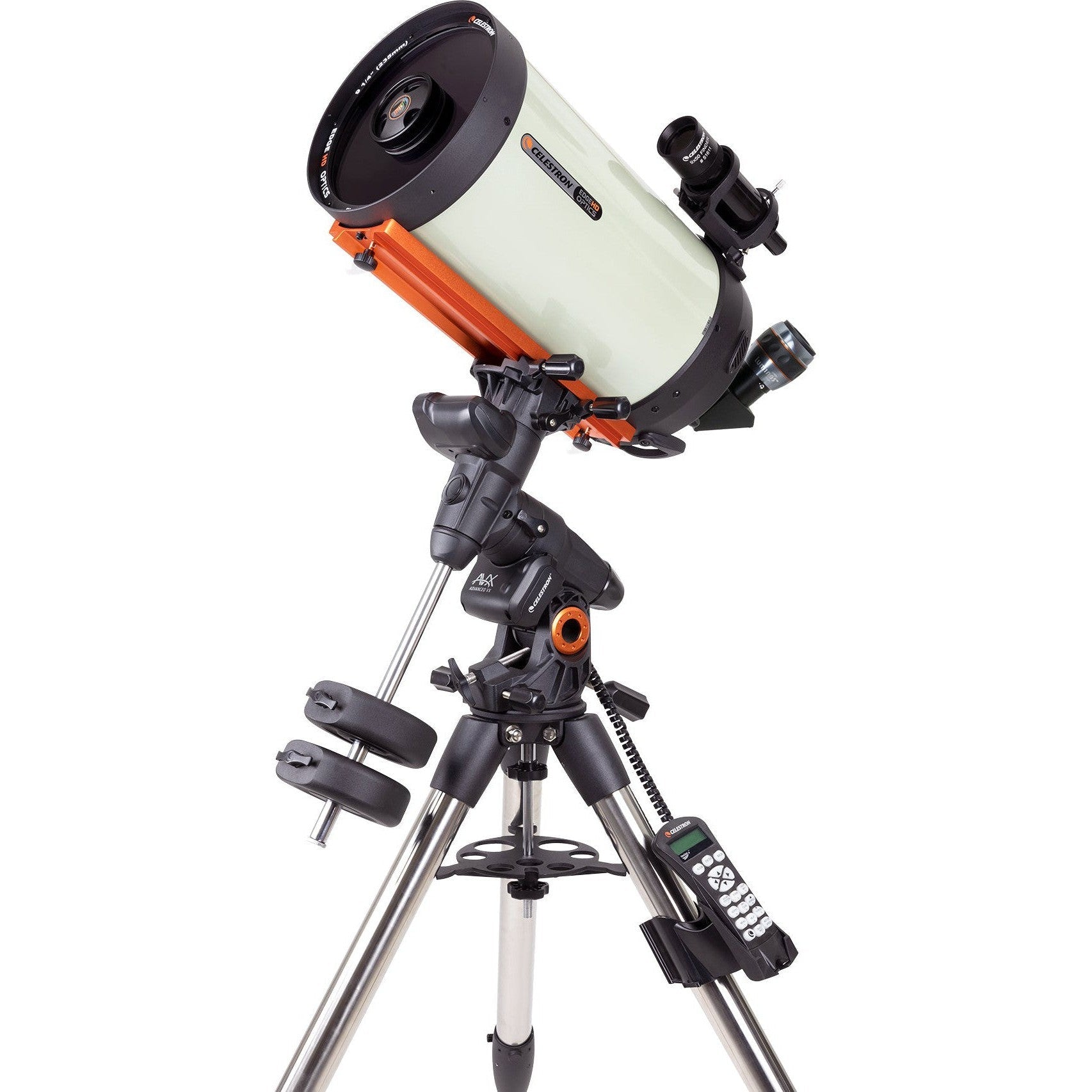
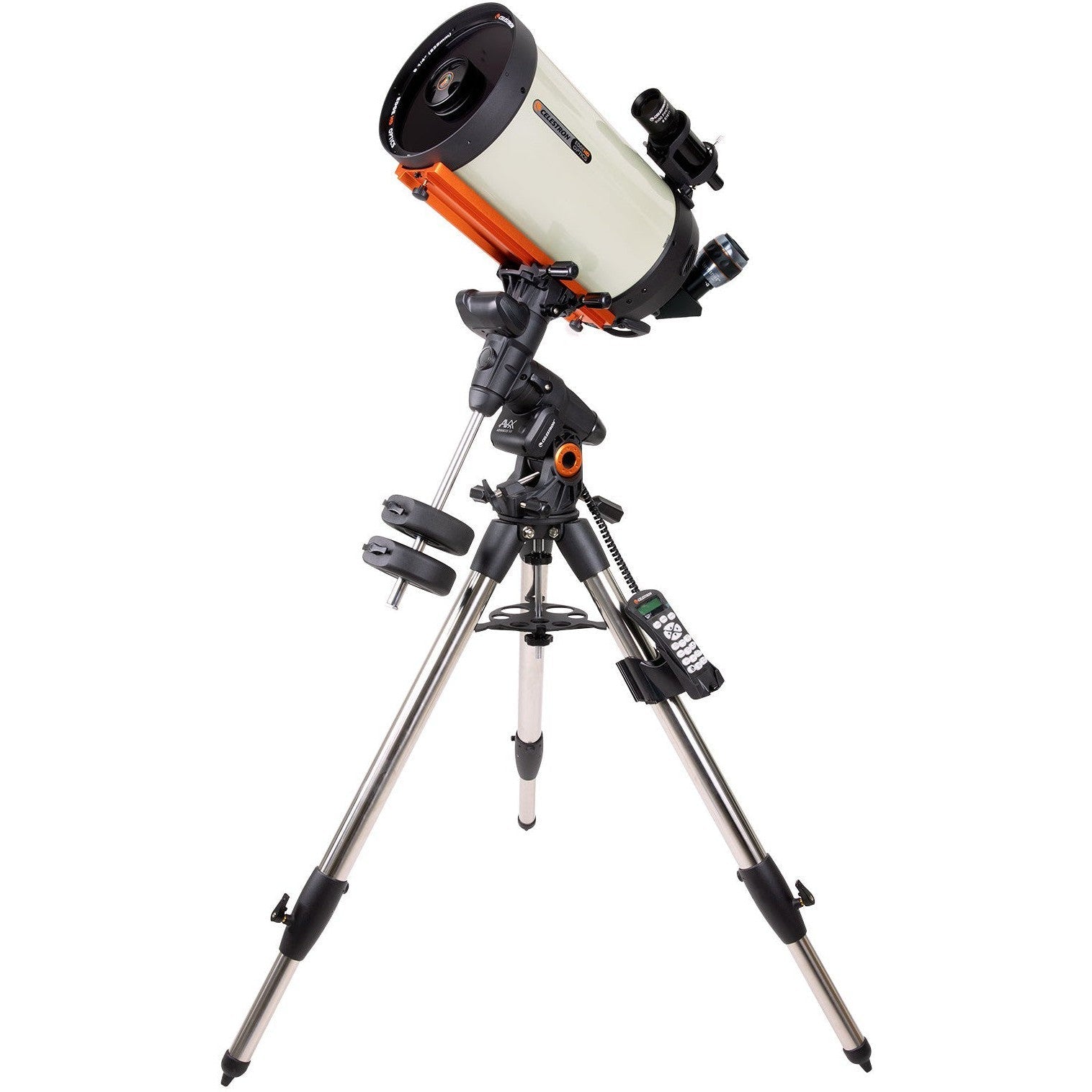
The Celestron Advanced VX 9.25" EdgeHD Telescope pairs Celestron’s 235mm EdgeHD flat-field optical tube with the portable Advanced VX computerized German equatorial mount. It is designed for astronomers who want a compact but serious SCT-based system for high-resolution lunar and planetary observing, visual deep-sky work, and smaller-object astrophotography.
Who Is This Product Best For?
This telescope is best for intermediate to advanced visual observers and astrophotographers who want more aperture than an 8" system while keeping the mount, tripod, and optical tube manageable for transport. It is well suited to planetary imagers, lunar observers, compact galaxy imaging, globular clusters, and users who want a flat corrected EdgeHD optical design.
Why Choose This Product?
- 235mm f/10 EdgeHD optical design corrects coma and field curvature for a flatter field.
- StarBright XLT coatings support strong light transmission for visual and imaging use.
- Advanced VX mount includes GoTo control, autoguider port, PEC, and meridian imaging capability.
- Dual saddle compatibility supports CG-5 and CGE-style dovetails.
- Includes useful visual accessories: 23mm 2" eyepiece, diagonal, finder, and counterweights.
Recommended Uses
- Lunar and planetary observing
- Planetary imaging with high-frame-rate cameras
- Deep-sky imaging of smaller targets such as galaxies and planetary nebulae
- Visual observing from home or dark-sky sites
- Intermediate portable GoTo observing setups
Compatibility and Accessory Notes
The EdgeHD optical tube uses a CGE dovetail and the Advanced VX mount accepts both narrow CG-5 and wider CGE saddle formats. For deep-sky imaging, use a suitable guide camera or off-axis guider, a stable power supply, and proper camera spacing. Optional reducers or HyperStar-style third-party systems can change the imaging speed and field of view, but they must be matched carefully to the EdgeHD 9.25 optical system.
Important Limitations
This is not the simplest beginner telescope. Long focal length imaging requires careful polar alignment, guiding, balance, and seeing conditions. The AVX mount is portable, but the 9.25" EdgeHD is a substantial optical tube and should be balanced carefully. Solar observing requires a proper full-aperture solar filter; never point this telescope at the Sun without certified solar protection.
Frequently Asked Questions
Is this good for beginners?
It can work for a motivated beginner, but it is better for intermediate users because the long focal length and equatorial mount require careful setup.
What is it best used for?
It is strongest for lunar, planetary, visual deep-sky observing, and smaller-object imaging where aperture and image scale matter.
Is it for visual observing or astrophotography?
Both. It includes visual accessories and has mount features that support imaging, but long focal length deep-sky imaging requires guiding and good setup discipline.
Does it require additional accessories?
For imaging, expect to add a camera, adapters, power supply, guiding solution, and possibly a reducer depending on your target type.
When should it not be recommended?
Do not choose this as a first grab-and-go telescope or for wide-field beginner imaging. A smaller refractor or shorter focal length astrograph is easier for wide-field work.
Our Recommendation
Ontario Telescope recommends the Advanced VX 9.25" EdgeHD for users who want serious aperture, corrected optics, and a portable GoTo equatorial platform. Choose it when image scale and visual performance matter; choose a smaller refractor or RASA-style system if wide-field imaging is the priority.
| Product Type | Computerized EdgeHD Schmidt-Cassegrain telescope package |
|---|---|
| SKU | 12033 |
| Aperture | 235 mm / 9.25 in |
| Focal Length | 2350 mm |
| Focal Ratio | f/10 |
| Optical Design | EdgeHD Schmidt-Cassegrain |
| Mount | Advanced VX computerized German equatorial mount |
| Optical Coatings | StarBright XLT |
| Dovetail | CGE dovetail; AVX saddle supports CG-5 and CGE formats |
| Primary Use | Visual observing, lunar and planetary imaging, small deep-sky imaging |
| Important Note | Long focal length imaging requires accurate setup, guiding, and balance. |
You may also like
Recently viewed
Recent Blog Posts
View all
Your Guide Graph Is Lying to You
Read More

D-Size vs V-Size: A Complete Guide to Telescope Dovetail Systems
Read More

What Is Back Focus in Astrophotography? Telescope Reducers, Flatteners, and Spacing Explained
Read More