


- Description
A T-Ring is one of the first accessories you will need to take pictures through a telescope or spotting scope. If you have a Canon EOS mirrorless camera body, the Celestron EOS M-Mount T-Ring is the one for you.
How to Use
To use this T-Ring, place the M-Mount T-Ring on your Canon mirrorless camera. Just like changing a lens, line up the T-Ring to your camera’s lens mount. Push it in and turn until you hear a click. The T-Ring has a sturdy bayonet flange that locks for a secure fit. Once you attach the T-Ring to your camera, you’re ready to connect your telescope. The telescope side of the T-Ring has threads that accept a variety of camera adapters, including the Celestron T-Adapter. The adapter you choose depends on the type of photography you wish to do.
Body
The Canon M-Mount 42mm T-ring is machined aluminum black anodized. The internal surfaces are blackened and glare-threaded to provide the highest contrast. The T-Ring has a ribbed surface for a secure grip while threading/unthreading. The Canon M-Mount 42mm T-Ring is compatible with M42 x 0.75 (T-Thread) camera adapters.
Terrestrial and Celestial Imaging
Pair your T-Ring with a Celestron T-Adapter to turn your telescope or spotting scope into a large telephoto lens. Depending on the optics you own, pair your M-Mount T-Ring with these adapters:
You may also like
Recently viewed
Recent Blog Posts
View all
Your Guide Graph Is Lying to You
Read More

D-Size vs V-Size: A Complete Guide to Telescope Dovetail Systems
Read More
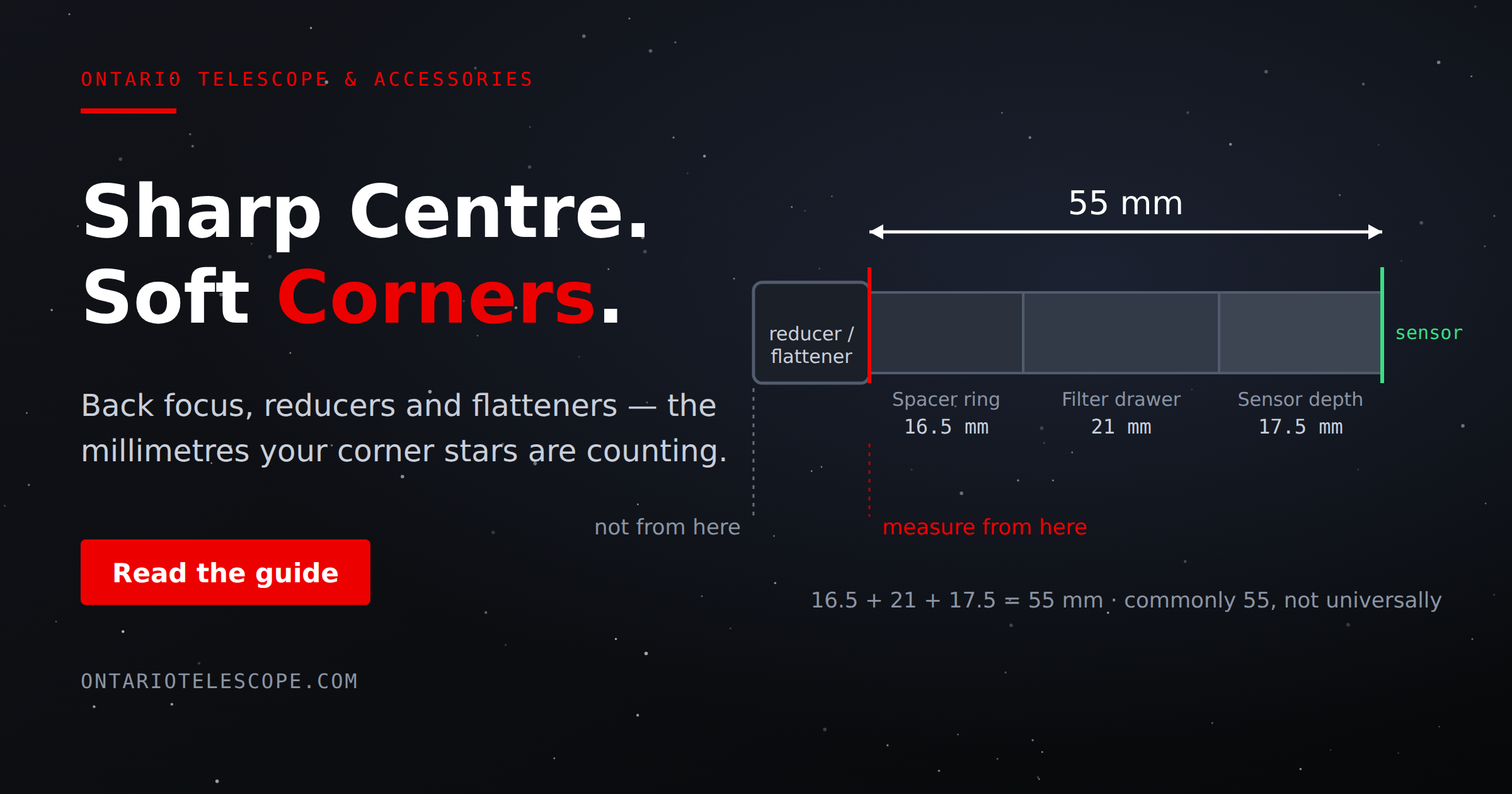
What Is Back Focus in Astrophotography? Telescope Reducers, Flatteners, and Spacing Explained
Read More