


- Description
The RCC I is designed to correct Coma in fast Newtonian imaging systems. It provides a long back-focus of 91.5 mm measured from the T-2-thread, enabling the use of Off-Axis Guiders, Adaptive Optics and Filter Wheels. Autoguiding can be done easily with the RCC, an RCC Off Axis Guider and an Autoguiding Camera.
The RCC works from f/3.5 to f/6 - it is perfect on f/4
reproduction scale is 1:1 - in contrast to many other coma correctors, the RCC is no Barlow lens which rely on a magnification to make the larger back-focus to the sensor possible
The RCC is the only coma corrector which gives you enough back-focus for filter wheels or other accessories without changing the focal ratio
To attach the RCC directly to a camera (without an Off-Axis-Guider), we recommend the VariLock 46 T-2 Extension (# 2956946, T-2 part-no. #25V). It has got not only a graduated mm-scale, but also a marking at 36.5mm, to show you the perfect working distance for a DSLR with T-2-adapter. Each air/glass-surface of the triplet RCC optical system is coated with our Phantom Group Coating (R) for the best-possible transmission.
You can remove the stopper ring to place the RCC deeper inside of your focuser.
You may also like
Recently viewed
Recent Blog Posts
View all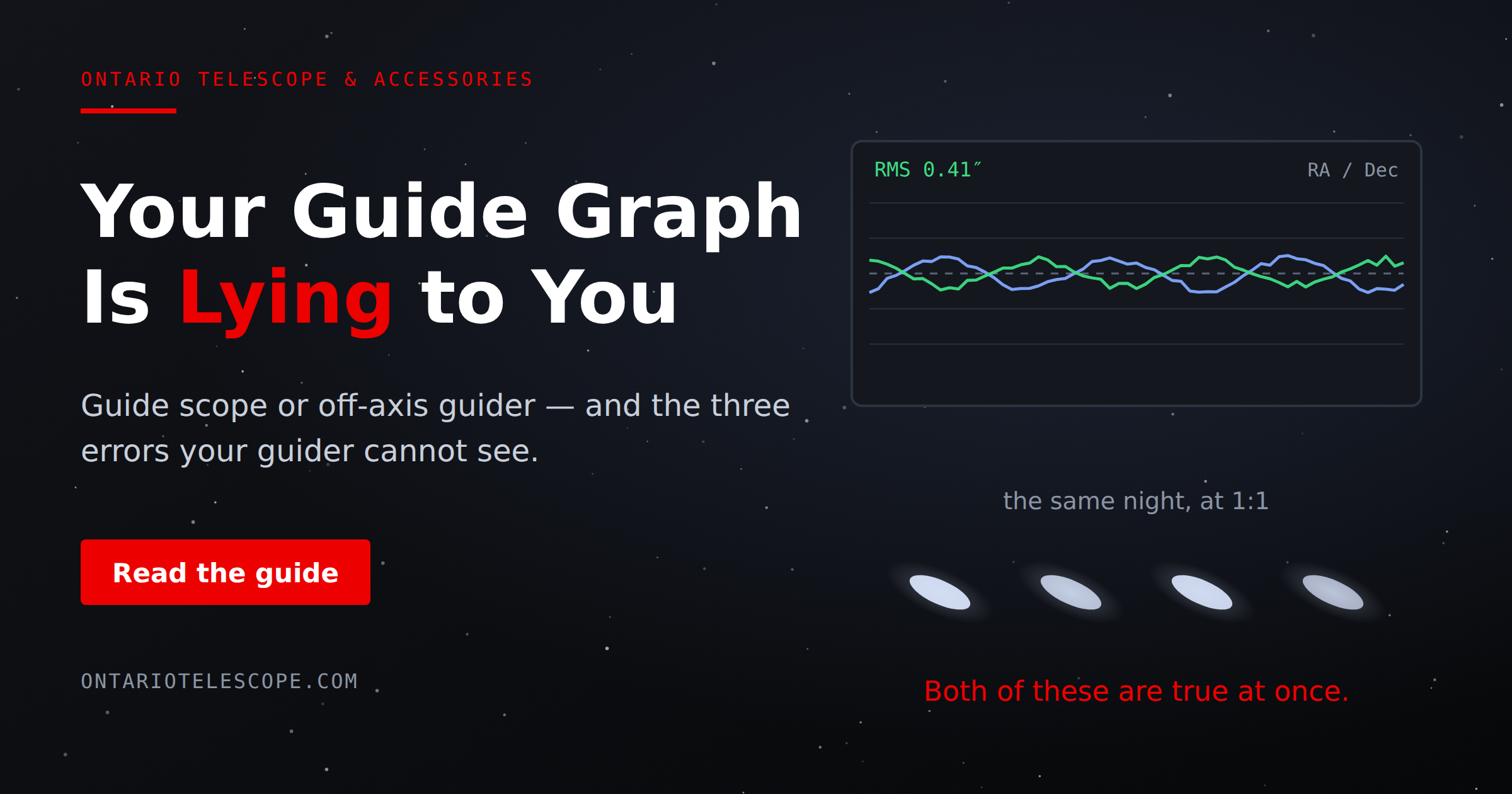
Your Guide Graph Is Lying to You
You drove ninety minutes to dark sky, PHD2 held 0.4 arcseconds all night, and half your subs still have eggs for stars. Here are the three things your
Read More
Read More

D-Size vs V-Size: A Complete Guide to Telescope Dovetail Systems
What's the difference between D-size and V-size telescope dovetails? Here's everything you need to know.
Read More
Read More
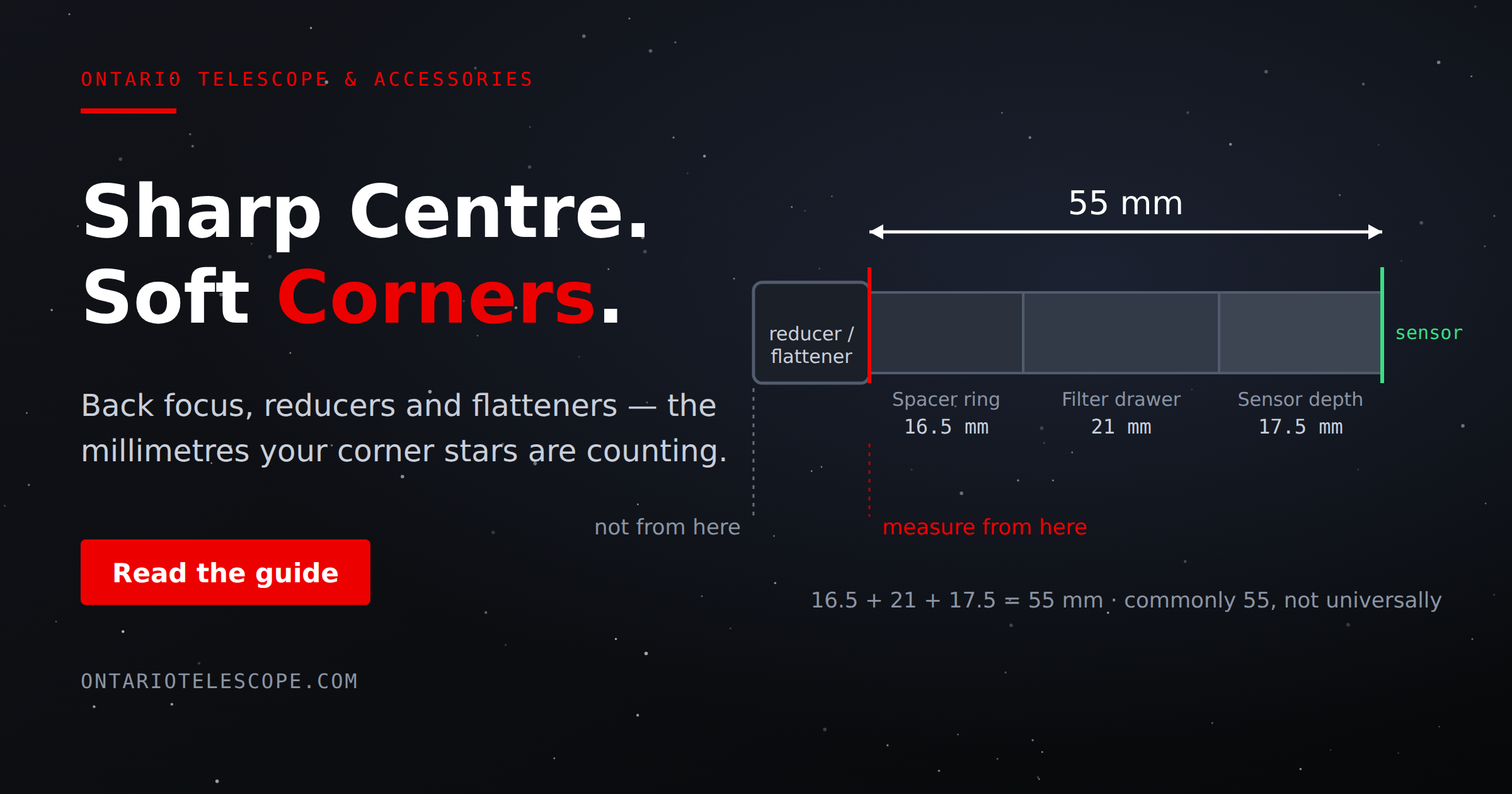
What Is Back Focus in Astrophotography? Telescope Reducers, Flatteners, and Spacing Explained
What Is Back Focus in Astrophotography? Telescope Reducers, Flatteners, and Spacing Explained
Back focus is one of those astrophotography terms that c
Read More
Read More