


- Description
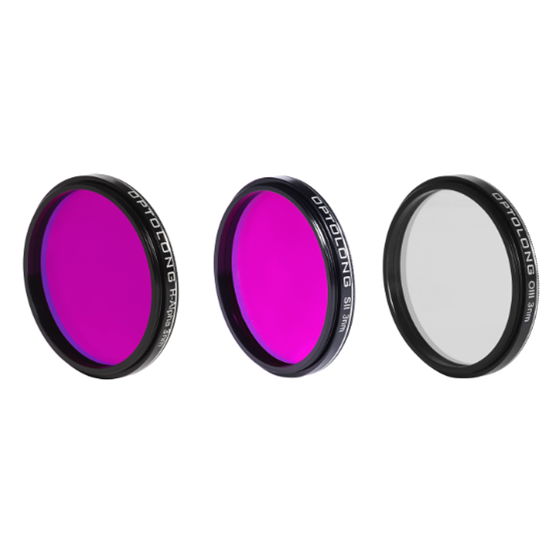
Optolong SHO-3nm Narrowband Filters Introduction
Optolong SHO-3nm filter kit includes SII 3nm, H-Alpha 3nm, and OIII 3nm narrow band filters, generally working with astronomical monochrome cooling CCD and modified DSLR imaging in each single-channel. Corresponding with RGB channel (HA, OIII, SII), photographers can process Hubble images by astronomical post processing software.
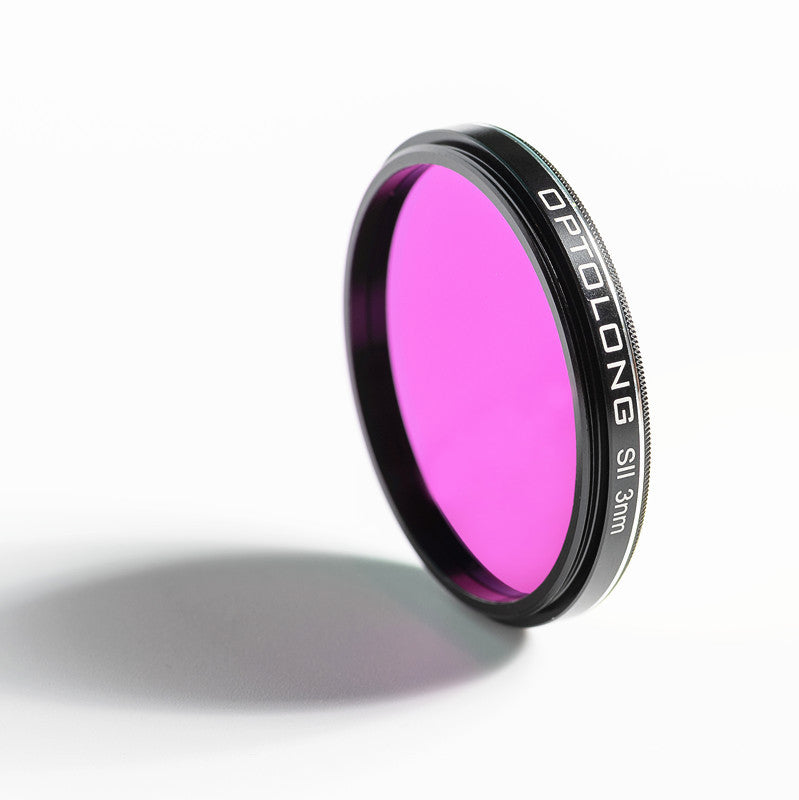
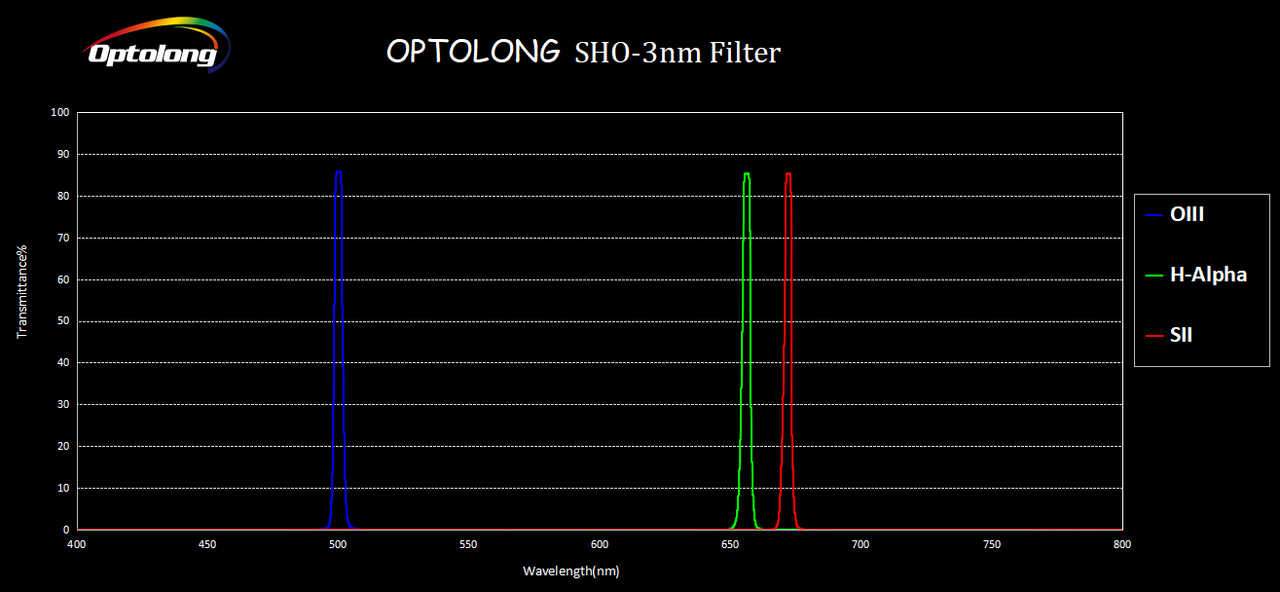
Extra narrowband SIICCD3nm filter (Sulfur II for CCD) is designed for nebula observation allowing 3nm bandwidth of light centered on a wavelength of 672nm through, and reducing the transmission of certain wavelengths of light, specifically those produced by artificial light including mercury vapor, and both high and low pressure sodium vapor lights and the unwanted natural light caused by neutral oxygen emission in our atmosphere (i.e. skyglow)
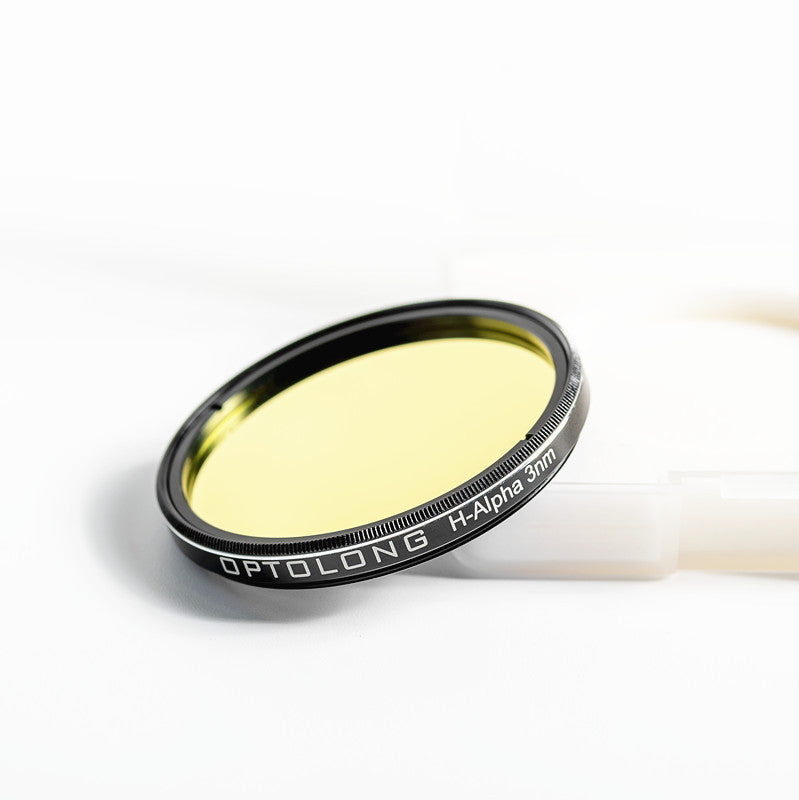
H-Alpha 3nm filter is the popular narrowband filter allowing 3nm bandwidth of light centered on a wavelength of 656nm through, and reducing the transmission of certain wavelengths of light, specifically those produced by artificial light including mercury vapor, and both high and low pressure vapor lights and unwanted natural light caused by neutral oxygen emission in our atmosphere (i.e.skyglow). Better choice of narrowband H-Alpha astrophotography filter for highest contrast and revealing subtle nebula details.
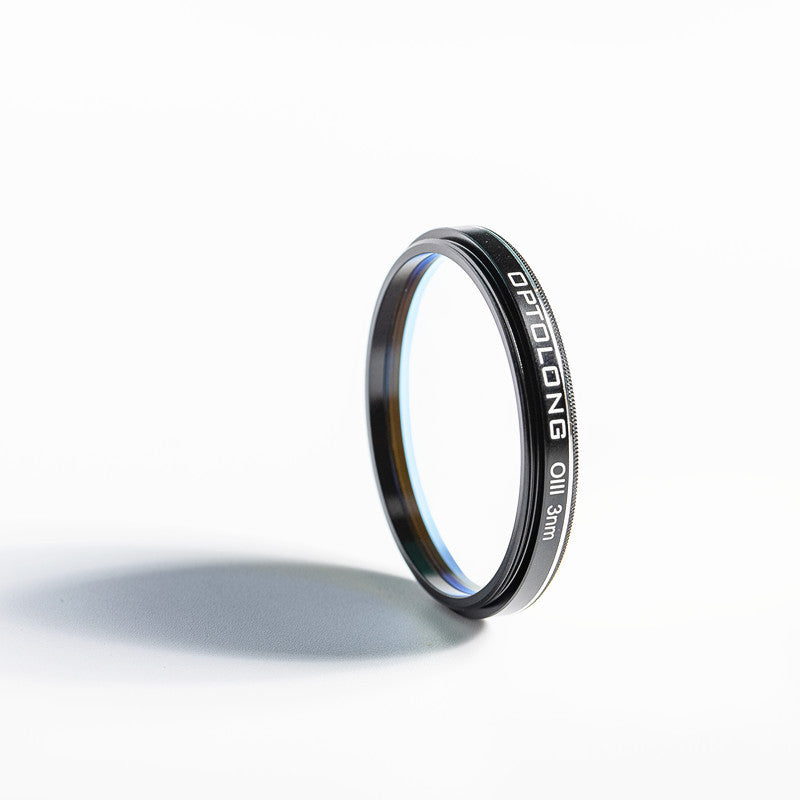
Extra narrowband OIII-CCD 3nm filter is designed for nebula observation allowing 3nm bandwidth of light centered on a wavelength of 500nm through, which corresponds to OIII emission line, and reducing the transmission of certain wavelengths of light, specifically those produced by artificial light including mercury vapor, and both high and low pressure sodium vapor lights and the unwanted natural light caused by neutral oxygen emission in our atmosphere (i.e.skyglow).
OIII emits 495.9nm and 500.7nm and it is a blue-green colored filter. Many of images of planetary nebula and supernoval remnants are taken only with H-Alpha and OIIII filters. They show great structural details, but have natural colors, looking like an RGB image.
Features:
Give you higher contrast and greater detailed viewing;
Decrease background noise and improve the contrast of objects;
Increase the faint nebula signal and make it to be brightness;
With narrow band filters kit, you are able to process a Hubble image;
Through the optimization of the substrate and upgrading of coating technology.
Reference Spectrum

?This curve is only for reference, and is not used as the final product data.
How to read the chart?
?The horizontal axis is the Wavelength in Nanometers(nm).
?The vertical axis is transmission in %.
?The BLUE line shows the transmission of OIII3nm.The H-Alpha 3nm line is shown in GREEN. And the SII 3nm filter line is shown in RED.
You may also like
Recently viewed
Recent Blog Posts
View all
Your Guide Graph Is Lying to You
Read More

D-Size vs V-Size: A Complete Guide to Telescope Dovetail Systems
Read More

What Is Back Focus in Astrophotography? Telescope Reducers, Flatteners, and Spacing Explained
Read More