


- Description
- Specifications
Product Overview
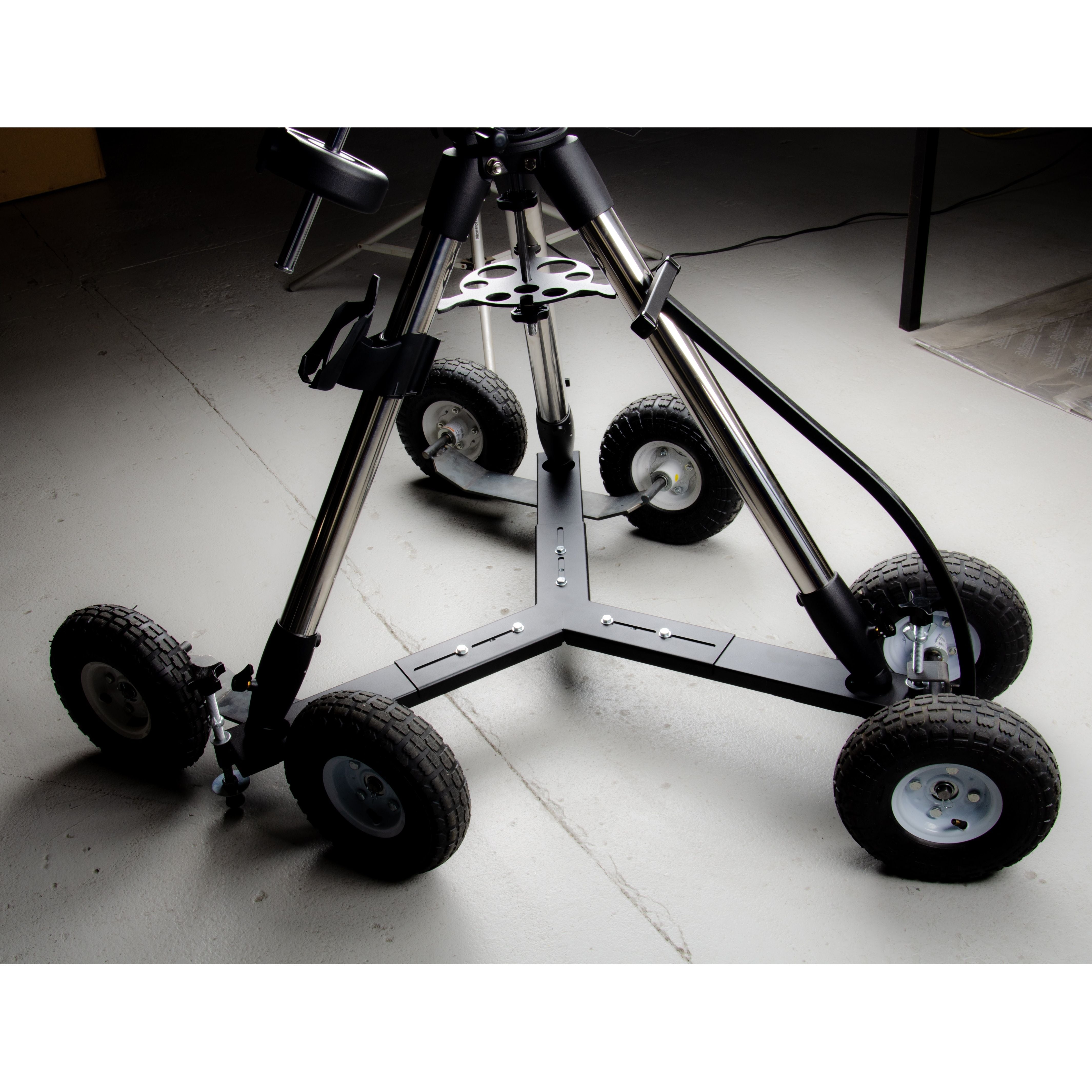
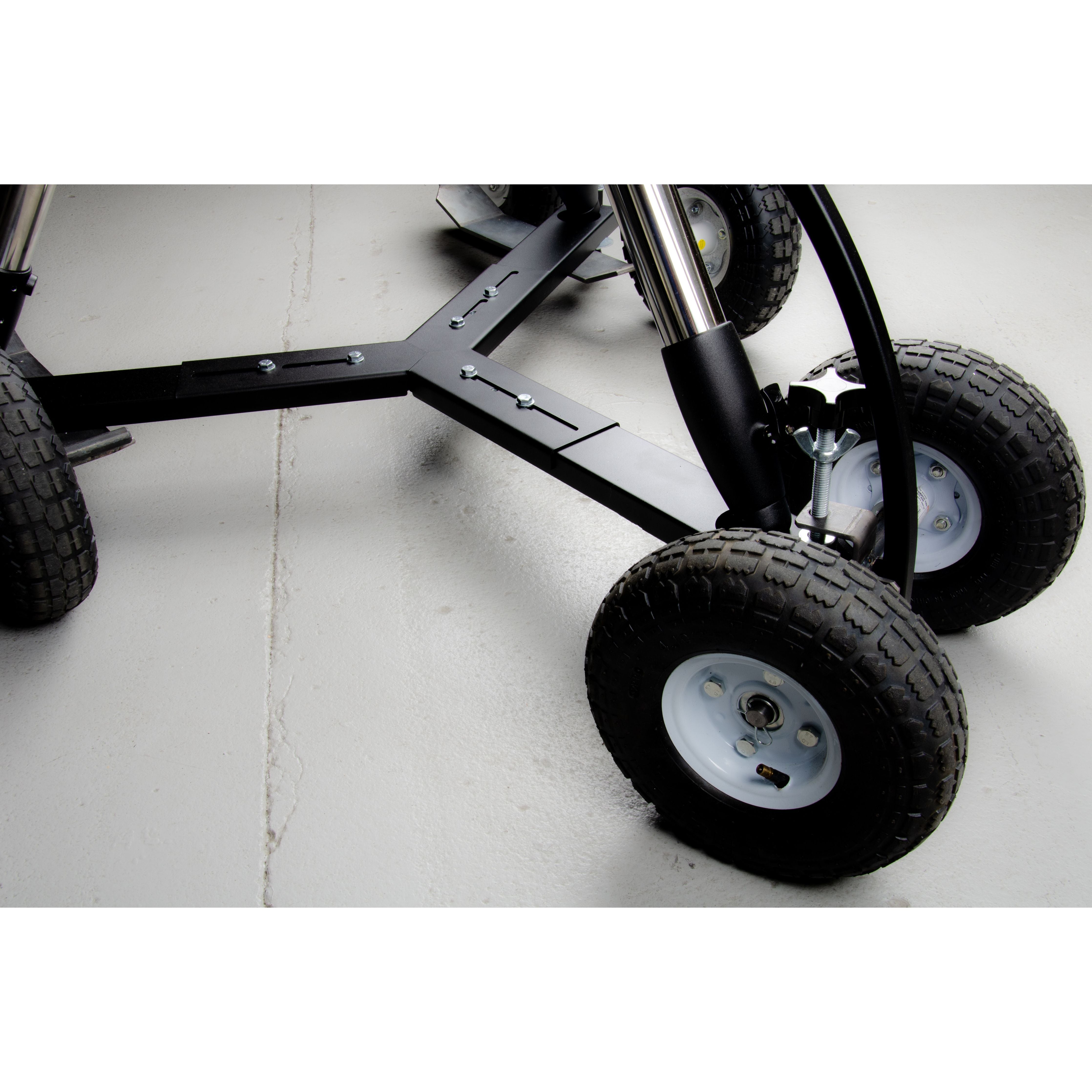
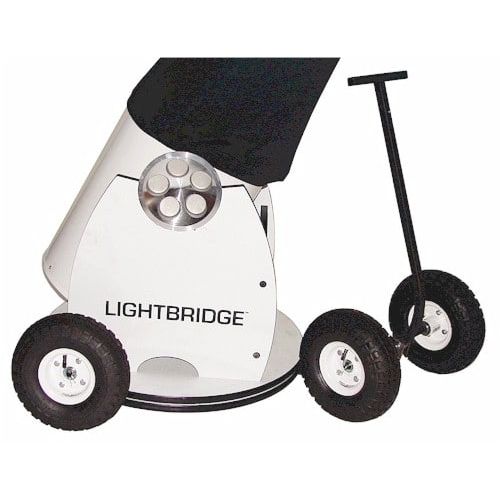
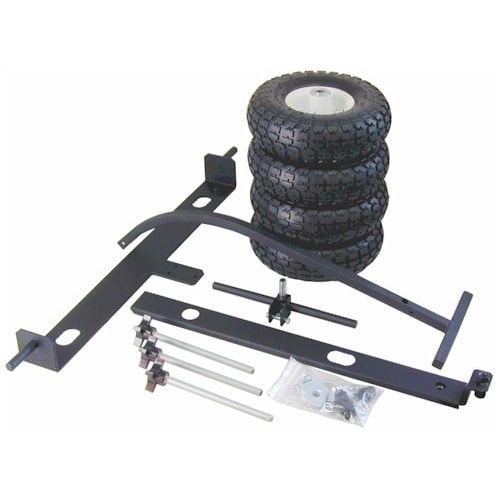
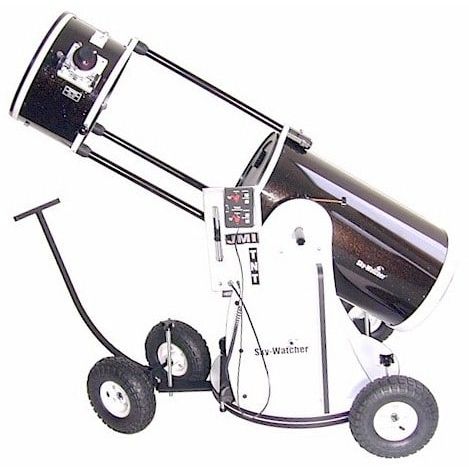
The JMI Sky Trekker 300 Wheeley Bar is a Dobsonian dolly for telescopes in the 10″ to 12″ class. The assembled Dob sits on a welded steel frame riding on 10″ pneumatic tires, which lifts the ground board about 3.5″ clear and rolls the telescope out in one piece. The frame is 32″ wide at the rear wheels by 38.4″ long overall, takes ground boards up to 27.5″ in diameter, and ships at 29.0 lb. JMI builds it in the USA.
Who It's For
This is a good match if you own a 10″ or 12″ Dobsonian and the rocker box has reached the size where carrying it out is the part of the night you think about first. It suits a telescope stored assembled in a garage or shed, and it earns its keep on truss-tube Dobs where the rocker box is both heavy and awkward to get a grip on.
Key Features & Design
- Sized for 10″–12″ Dobsonians: Fits ground boards up to 27.5″ in diameter.
- Two published foot spacings: Accepts a centre-of-foot to centre-of-foot span of 15.75″–16.875″ (400–428 mm) or 19.5″–20.625″ (495–523 mm).
- 10″ pneumatic tires: All-terrain air-filled tires are standard, with no wheel option to select.
- 3.5″ of lift: Raises the telescope roughly 3.5″ off the ground.
- 32″ × 38.4″ footprint: 32″ across at the rear wheels and 38.4″ front to back overall.
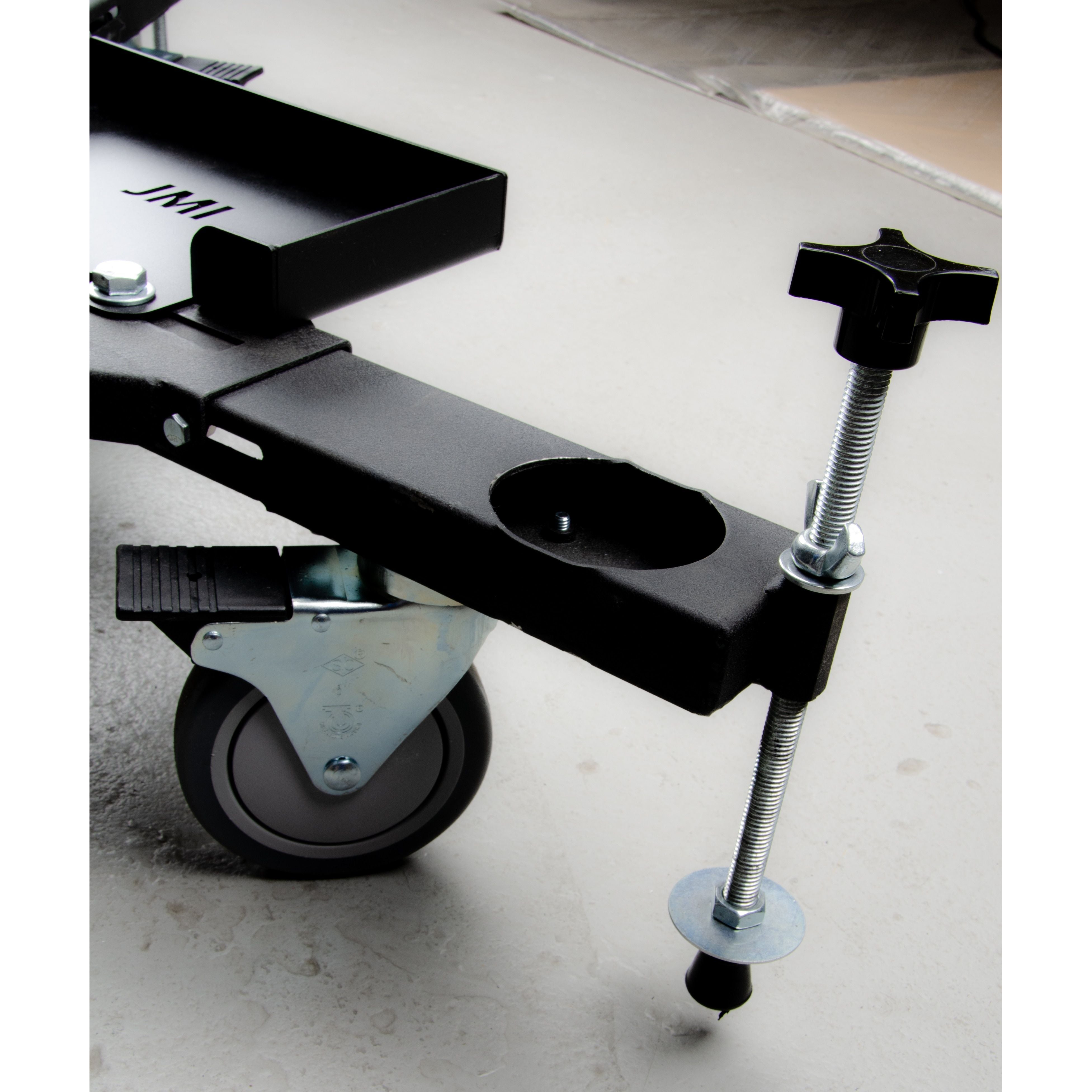
- Locking wheels and leveling bolts: The wheels lock at the observing position and the bolts bring the base flat.
- Welded steel: One-piece welded steel construction, made in the USA by JMI.
Mechanical Design
Like the rest of the Sky Trekker series, the 300 is dimensioned around the three feet under a Dobsonian ground board rather than the diameter of the board on its own. JMI publishes two accepted spans — 15.75″–16.875″ and 19.5″–20.625″ centre-of-foot to centre-of-foot — which is how one frame covers both the compact 10″ solid-tube Dobs and the wider-footed 12″ models. The step up from the Sky Trekker 200 is in the frame itself: 32″ across against 27″, and a 27.5″ ground board limit against 22″, which is what carries the extra mass of a 12″ rocker box without the frame working against the board. Leveling bolts take up slope once the telescope is placed, the wheels lock, and the 10″ pneumatic tires absorb driveway joints and lawn ruts on the way out rather than passing them into the tube.
Recommended Uses
- Rolling an assembled 10″ or 12″ Dobsonian from a garage or shed out to a driveway or observing pad
- Keeping a truss-tube Dob on its dolly permanently so no rocker box lift is involved in a session
- Crossing grass, gravel or a broken driveway on air-filled tires rather than hard casters
- Repositioning a large Dob during the night to work around a roofline, a tree or a light
- Storing the telescope assembled instead of splitting the rocker box and optical tube each time
Compatibility and Accessory Notes
The Sky Trekker 300 is built for Dobsonians in the 10″ to 12″ class, with a ground board up to 27.5″ in diameter and a foot spacing inside one of the two published ranges. JMI names the Apertura AD12, the Meade LightBridge 10″ and 12″, the Orion SkyQuest XT12 and XX12, the Zhumell 10″ and 12″, and the Sky-Watcher 12″ among the telescopes it fits. Fit is decided by the centre-of-foot to centre-of-foot distance — the straight-line distance between any two of the three feet under the ground board — rather than the aperture on the tube. At 32″ wide the loaded frame calls for an opening of 32″ or more, so a tight 30″ interior door is narrower than the frame. Smaller Dobs are covered by the Sky Trekker 200, and larger ones by the 350 and 400. Tell us your telescope model, or the distance between two of its feet, and we'll confirm the fit before you order.
Good to Know Before You Order
- Fit is set by foot spacing, not aperture. The two published spans are 15.75″–16.875″ and 19.5″–20.625″ centre-of-foot to centre-of-foot.
- The ground board limit is 27.5″ in diameter. Larger boards belong on the Sky Trekker 350 or 400.
- The frame is 32″ wide. JMI states that it passes through openings of 32″ and up, and that a tight 30″ interior door will not accommodate it — worth measuring the route out before ordering.
- This is a Dobsonian dolly. It carries a Dobsonian ground board; tripod-mounted telescopes are served by the Universal Wheeley Bars.
- The tires are pneumatic. Air-filled tires hold pressure and are topped up like any other pneumatic tire.
- Shipping weight is 29.0 lb for the dolly alone, before the telescope goes on it.
Frequently Asked Questions
Is it difficult to set up?
The dolly arrives as a welded steel frame. Setting up means placing the Dobsonian's ground board on it within one of the two published foot spacings, winding the leveling bolts until the base sits flat, and locking the wheels once the telescope is where you want it.
What is cof-to-cof distance, and how do I measure it?
It stands for centre-of-foot to centre-of-foot — the straight-line distance between any two of the three feet on the bottom of your Dobsonian's ground board. That is the figure the 15.75″–16.875″ and 19.5″–20.625″ ranges describe.
Will my Dobsonian fit?
JMI lists the Apertura AD12, Meade LightBridge 10″ and 12″, Orion SkyQuest XT12 and XX12, Zhumell 10″ and 12″, and Sky-Watcher 12″ as known fits, with the ground board up to 27.5″ across. For any other Dob it comes down to the foot spacing, and we are glad to check yours.
Will it fit through my doorway?
The frame is 32″ wide, so it passes through openings of 32″ and wider. A tight 30″ interior door is narrower than the frame.
Are there wheel options to choose?
No. The Sky Trekker series ships with 10″ pneumatic tires as standard, specified by JMI for all-terrain use, so there is no upgrade to add.
How is this different from the Sky Trekker 200?
The 300 is the larger frame — 32″ wide against 27″, a 27.5″ ground board limit against 22″, and wider foot spacings — which is what puts 10″ and 12″ Dobs on it rather than 8″ and 10″.
Bottom Line
In short: the Sky Trekker 300 is the Dobsonian dolly for the 10″ to 12″ class — ground boards to 27.5″, a 32″ × 38.4″ welded steel frame on 10″ pneumatic tires, 3.5″ of lift, locking wheels and leveling bolts, at 29.0 lb and made in the USA. Fit comes down to the spacing of the three feet under your ground board, and we will happily check that figure with you.
| Brand | JMI |
|---|---|
| Model | Sky Trekker 300 Wheeley Bar |
| Vendor part code | TPWLB12 |
| Product type | Dobsonian telescope dolly |
| Fits | 10″–12″ Dobsonian telescopes |
| Foot spacing (cof-to-cof) | 15.75″–16.875″ (400–428 mm) or 19.5″–20.625″ (495–523 mm) |
| Maximum ground board | 27.5″ diameter |
| Footprint | 32″ wide (at rear wheels) × 38.4″ long overall |
| Lift height | Approximately 3.5″ off the ground |
| Wheels | 10″ pneumatic all-terrain tires, locking |
| Leveling | Leveling bolts |
| Material | Welded steel |
| Weight | 29.0 lb (13,154 g) |
| Known compatible models | Apertura AD12, Meade LightBridge 10″ and 12″, Orion SkyQuest XT12 and XX12, Zhumell 10″ and 12″, Sky-Watcher 12″ |
| Minimum doorway width | 32″ |
| Country of origin | United States |
You may also like
Recently viewed
Recent Blog Posts
View all
Your Guide Graph Is Lying to You
Read More

D-Size vs V-Size: A Complete Guide to Telescope Dovetail Systems
Read More

What Is Back Focus in Astrophotography? Telescope Reducers, Flatteners, and Spacing Explained
Read More