


- Description
- Specifications
Product Overview
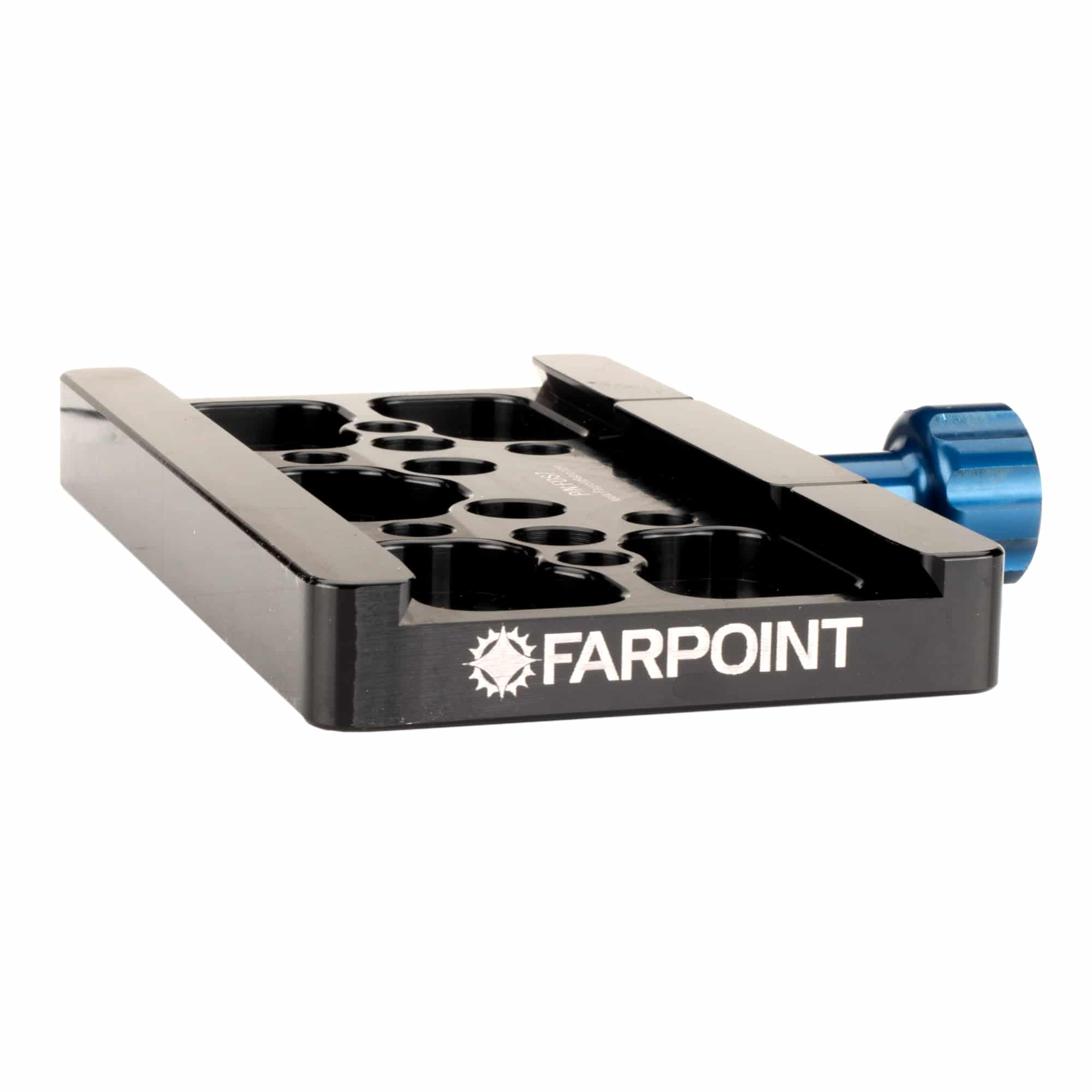
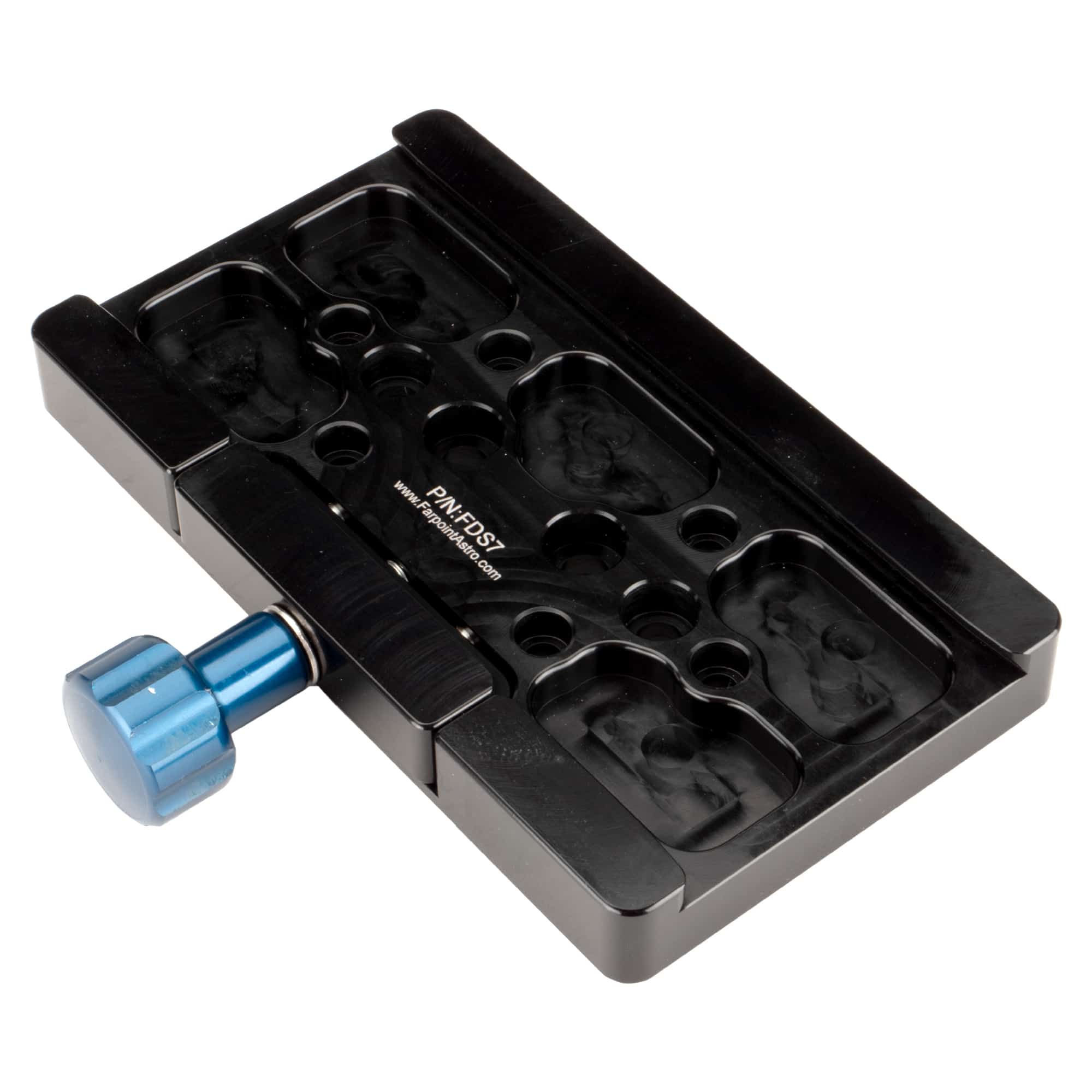
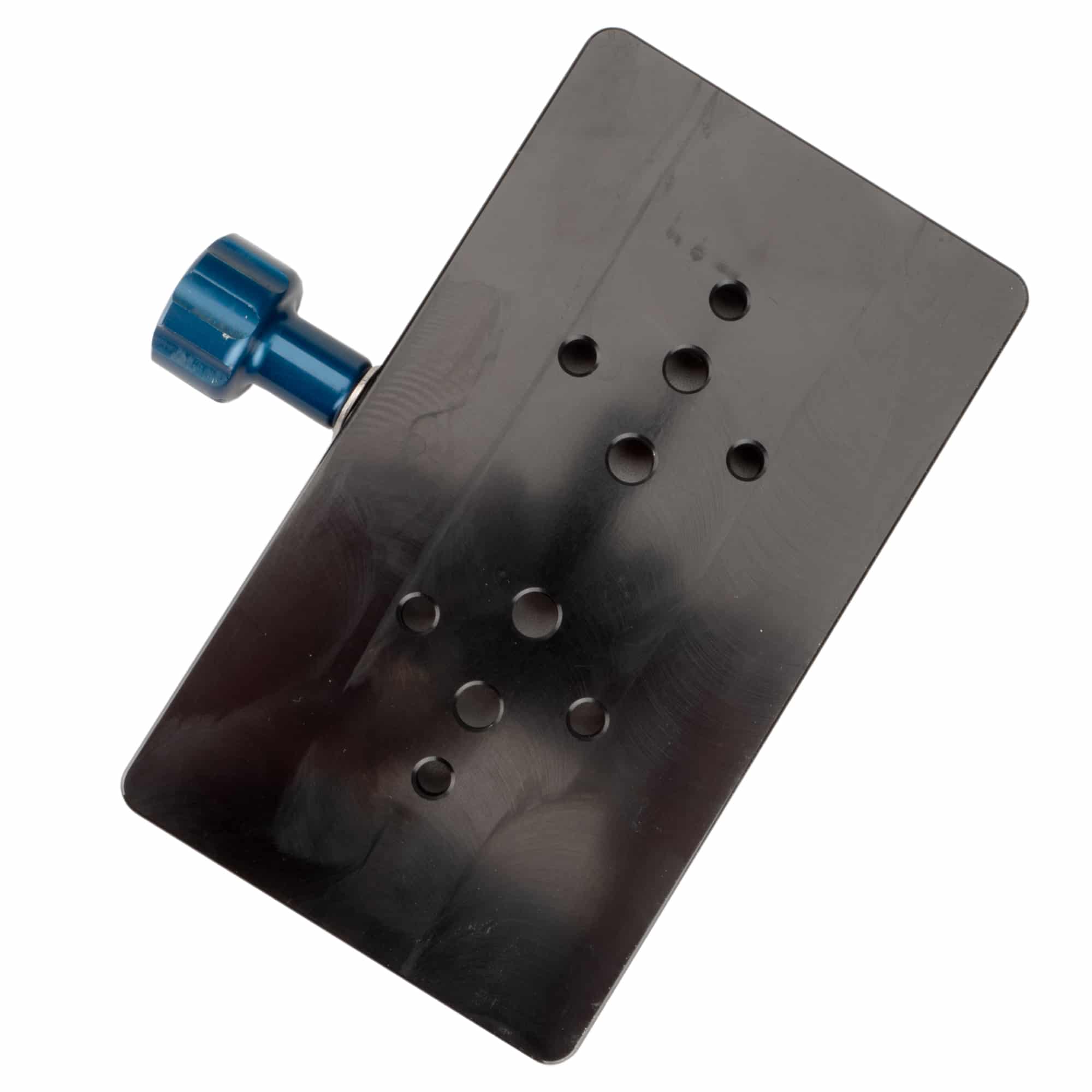
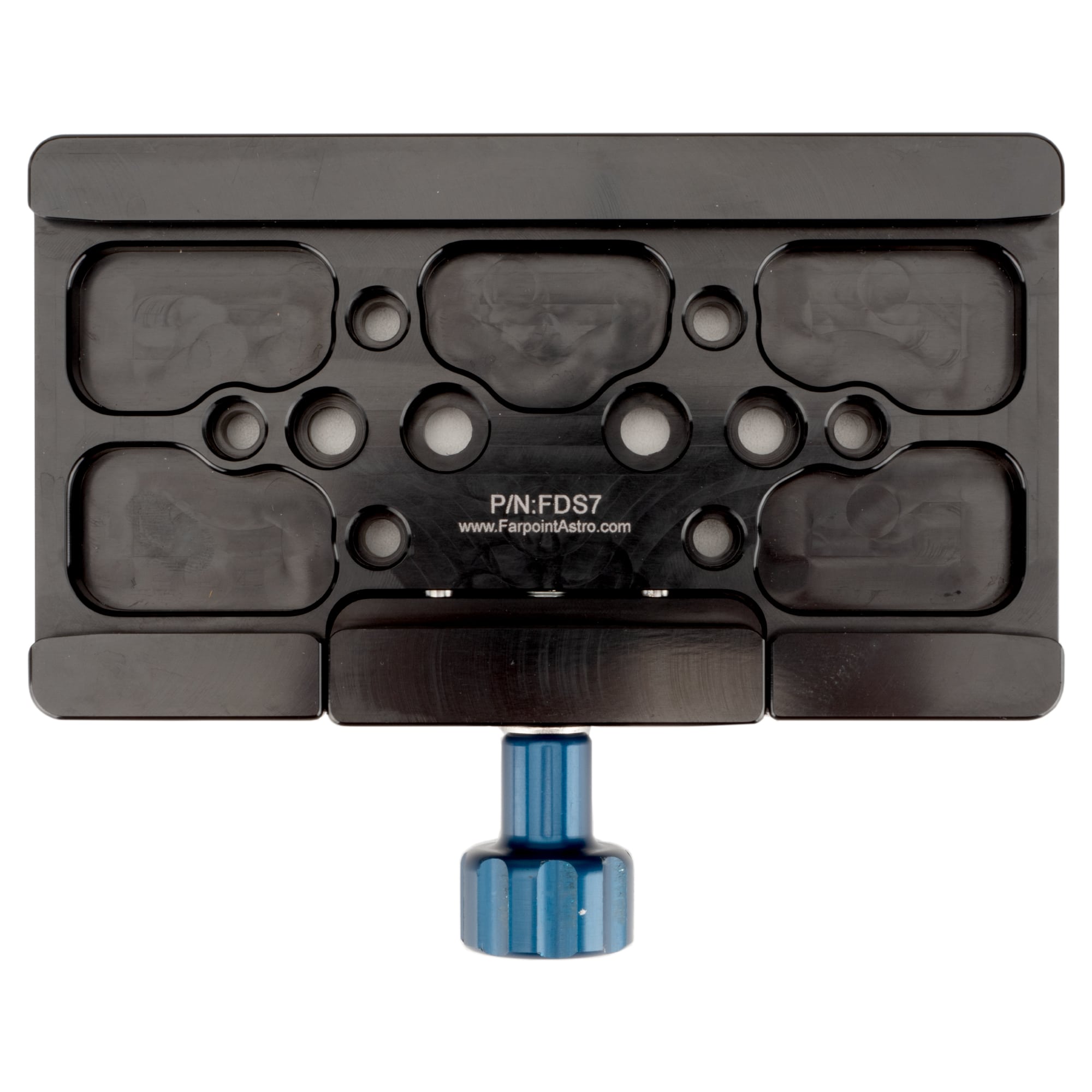
The Farpoint FDS7 is a 7″ D-size (Losmandy-style) saddle that replaces the Vixen-size saddle on an equatorial mount head, so the mount will take the wider Losmandy-style dovetail bars. Several hole patterns are machined into its underside to cover a range of mounts made over the years, and it clamps with a full non-marring bar rather than a bare screw tip. The saddle is CNC-machined in the USA from aluminum with a black anodized finish and weighs 2.125 lb.
Who It's For
This is a good match if your mount head came with a Vixen-size saddle but your tubes ride on D-size bars, and you would rather change the saddle once than re-bar every telescope. It also suits you if your current saddle leaves screw marks in your dovetails, or if a short factory saddle grips only a few inches of a long imaging bar and you want a seven-inch seat instead.
Key Features & Design
- 7″ clamping length: Seven inches of seat spreads the tube's load along the dovetail and resists rocking under an off-centre camera train.
- Non-marring clamping bar: A full bar presses flat against the dovetail face, so the grip is a surface rather than a point.
- Multiple machined hole patterns: More than one bolt pattern is cut into the base to suit equatorial mounts made across different generations.
- Vixen-to-D conversion: It turns a Vixen-size mount head into a Losmandy-standard saddle without touching the telescopes.
- Black anodized aluminum: Non-reflective beside the optical path and durable under repeated handling.
- CNC-machined in the USA: Saddle body and clamping bar are both machined parts.
Mechanical Design
A conventional saddle clamps with a screw that bears directly on the flank of the dovetail. Every bit of holding force passes through that screw tip, which is why a well-used bar ends up with a line of divots along one face. The FDS7 interposes a full clamping bar: the screw loads the bar, and the bar presses flat along the dovetail face. Contact grows from a point to a surface, so the saddle grips at least as hard while leaving no divots or scratches in the anodizing. The seven-inch run means that grip is distributed rather than concentrated, and because the bar withdraws as a single piece the tube seats and releases in one motion.
Recommended Uses
- Converting a Vixen-saddle equatorial head so it accepts Losmandy-style D bars.
- Standardising a collection on one dovetail size so any tube goes on any mount.
- Carrying a long imaging bar that needs more clamping length than a short factory saddle offers.
- Protecting the anodized finish on dovetails that are clamped and released at every session.
Compatibility and Accessory Notes
The saddle side takes D-size (Losmandy-style) dovetail bars — the wider standard used by Losmandy plates, Farpoint D bars and the bars supplied with larger SCTs and Newtonians. The mount side carries several machined hole patterns intended to fit Vixen-style equatorial mount heads made across a number of generations; the EQ6 and Orion Atlas are named among them. Because the pattern set covers a range rather than one specific model, the practical check is the bolt spacing on your own mount head. A V-size (Vixen) bar is narrower than this saddle's jaws and is a different fit, so tubes on Vixen bars would need a D bar or a V-to-D adapter plate. Farpoint publishes a separate 6″ saddle with a Takahashi mounting puck for Takahashi EM-style heads. If you are unsure whether your mount head matches one of the patterns, let us know which mount you have and we'll confirm the fit.
Good to Know Before You Order
- The mount and telescope are not included. This is the saddle on its own.
- It accepts D-size bars only. A Vixen-size dovetail sits loose in the clamping jaws.
- The hole patterns cover a range, not every mount. Farpoint publishes the pattern set as fitting Vixen-style heads made over the years rather than a closed model list, so the bolt spacing on a given head is the deciding detail.
- Takahashi EM-style heads use a different saddle. That interface is served by Farpoint's 6″ Takahashi saddle with its own mounting puck.
- The saddle weighs 2.125 lb. That mass sits above the mount head and counts against the mount's payload figure alongside the tube.
Frequently Asked Questions
Is it difficult to install?
It is a saddle swap: the original Vixen-size saddle comes off the mount head and the FDS7 bolts down in its place using whichever of the machined hole patterns matches. A hex key and a few minutes cover it on most heads.
Will it fit my EQ6 or Orion Atlas?
Those are among the mounts Farpoint names for the hole patterns machined into this saddle.
Can it take a Vixen-size dovetail?
The jaws are cut for the D-size (Losmandy-style) standard, which is the wider profile. A Vixen bar would not clamp securely in them.
What does the non-marring clamping bar do?
The clamping screw loads a full bar instead of touching the dovetail, so the pressure lands on a flat face and the anodizing comes away without divots or scratches.
How much weight will it carry?
The saddle hands the tube's load to the mount beneath it, so the limit is the mount's own payload rating rather than a figure for the saddle.
Bottom Line
In short: a 7″ D-size saddle with a non-marring full clamping bar and multiple machined hole patterns for Vixen-style mount heads, CNC-machined in the USA and weighing 2.125 lb — the one part that moves a mount from Vixen to Losmandy dovetails.
| Function | Upgrades Vixen-style mount heads to a D-size (Losmandy-style) saddle |
|---|---|
| Saddle length | 7″ |
| Mounting | Multiple machined hole patterns fit a range of equatorial mounts made through the years |
| Fits bars | D-size (Losmandy-style) dovetail bars |
| Dovetail standard | D-size (Losmandy-style) |
| Clamping | Non-marring full clamping bar |
| Material | Black anodized aluminum |
| Weight | 2.125 lb |
| Construction | CNC-machined |
| Country of origin | United States |
You may also like
Recently viewed
Recent Blog Posts
View all
Your Guide Graph Is Lying to You
Read More

D-Size vs V-Size: A Complete Guide to Telescope Dovetail Systems
Read More

What Is Back Focus in Astrophotography? Telescope Reducers, Flatteners, and Spacing Explained
Read More