
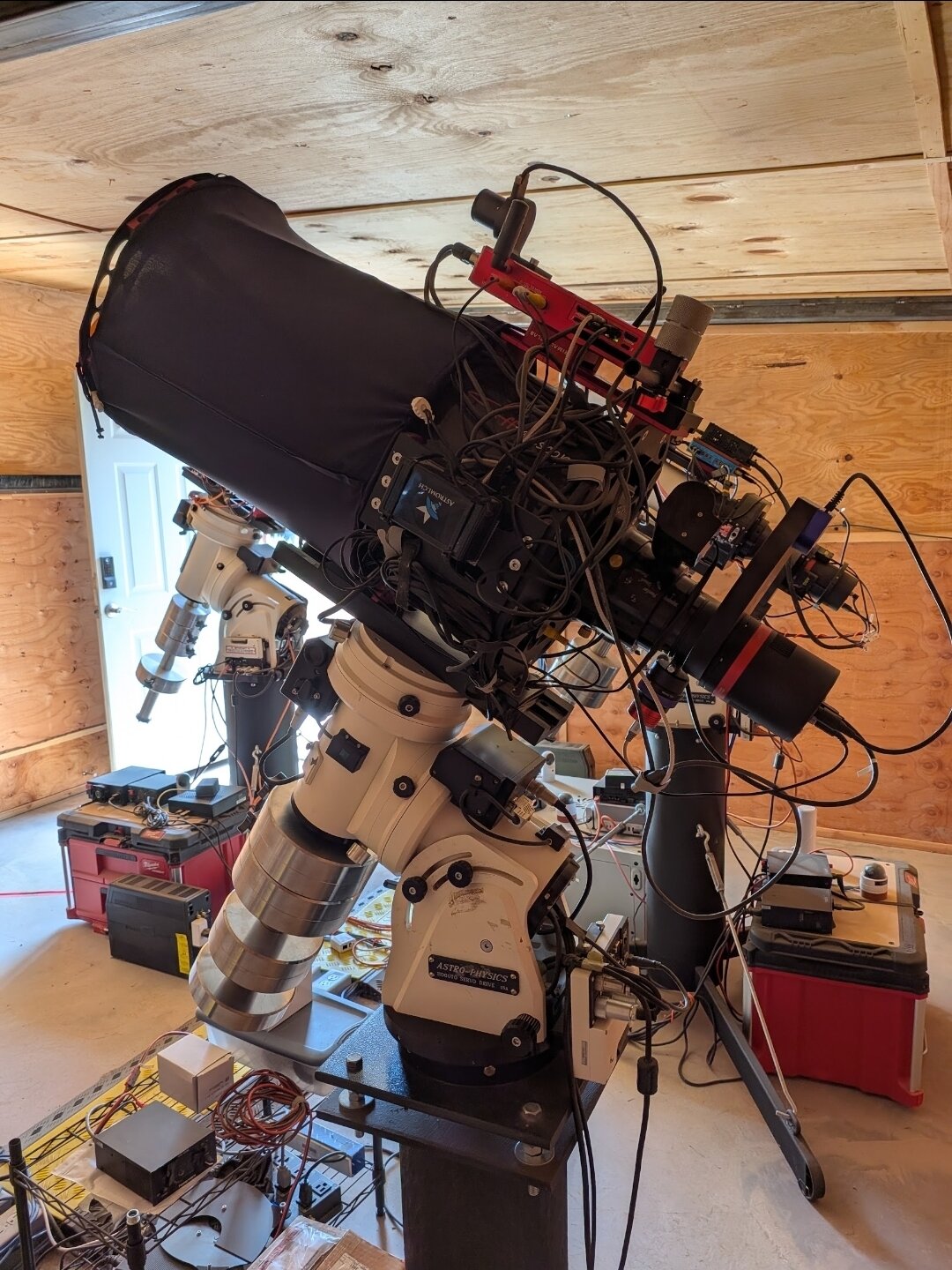


- Description
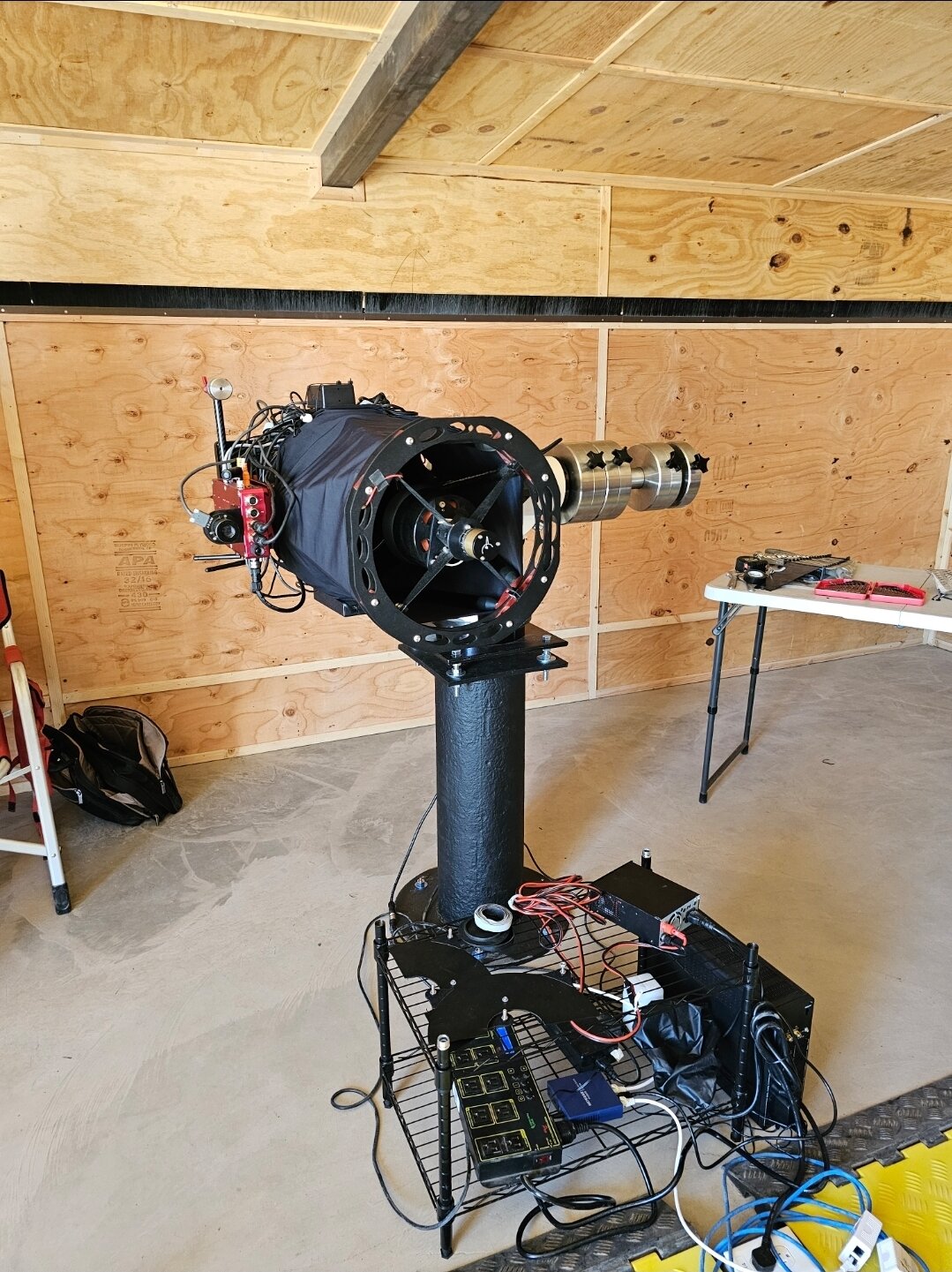
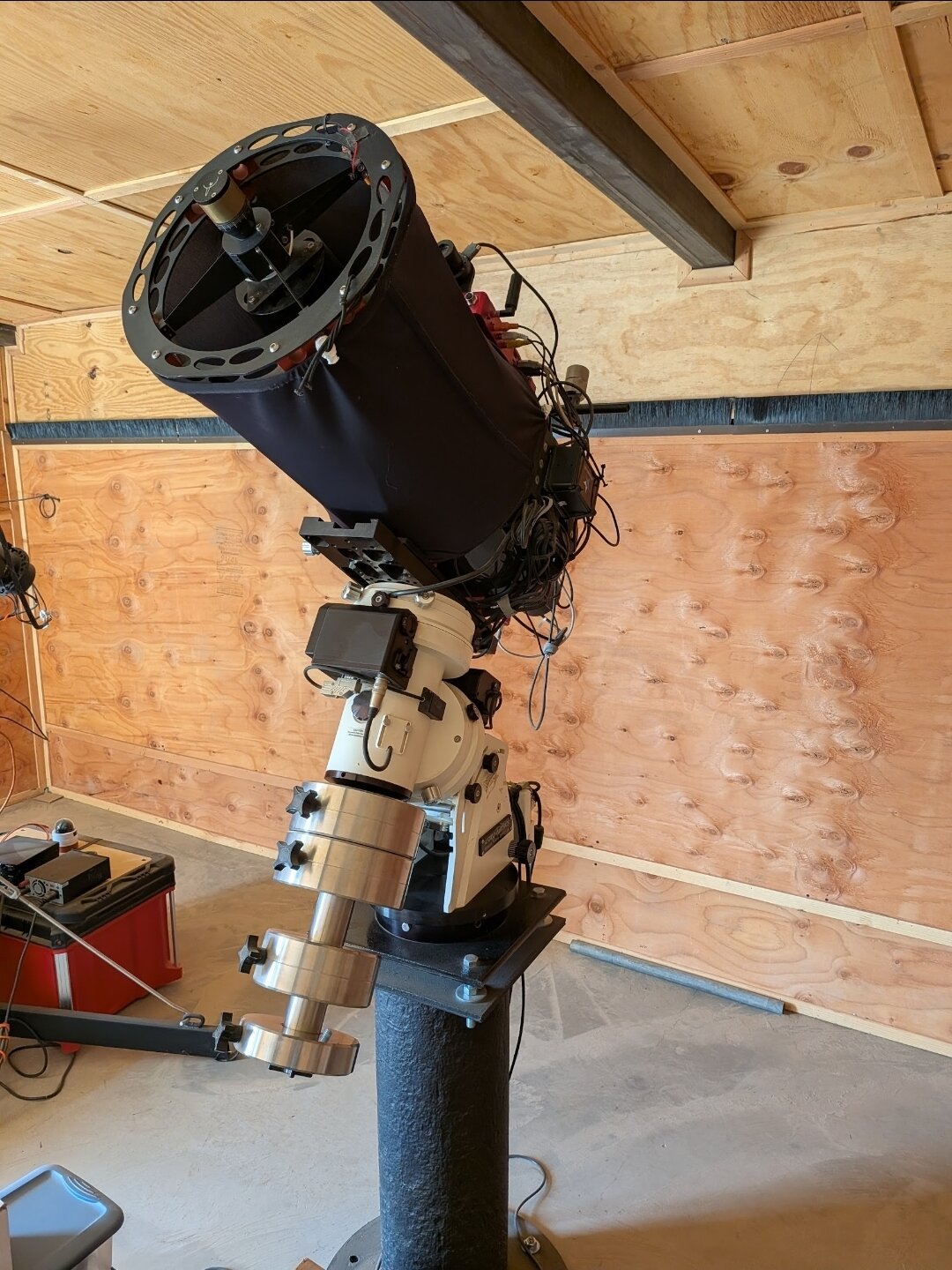
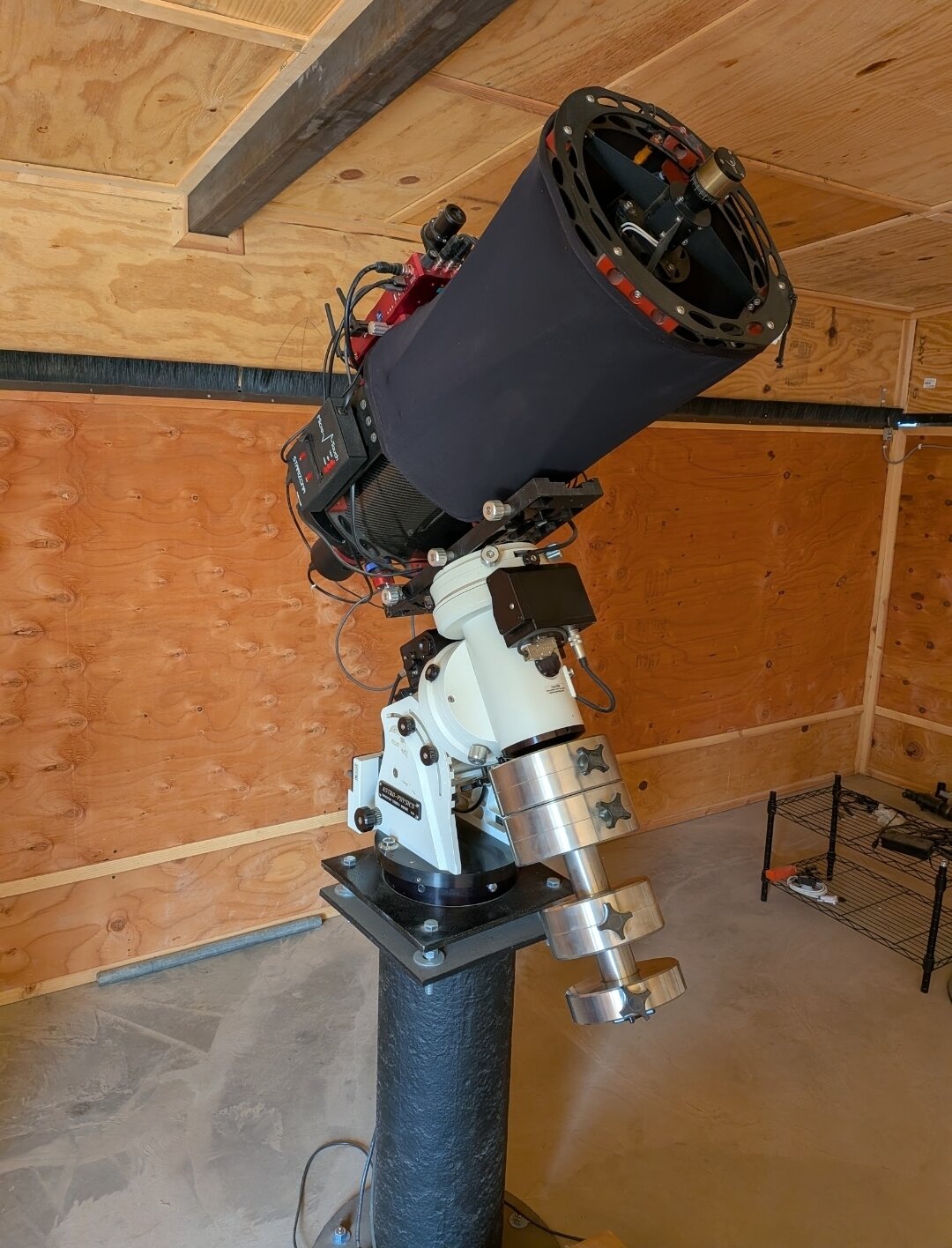
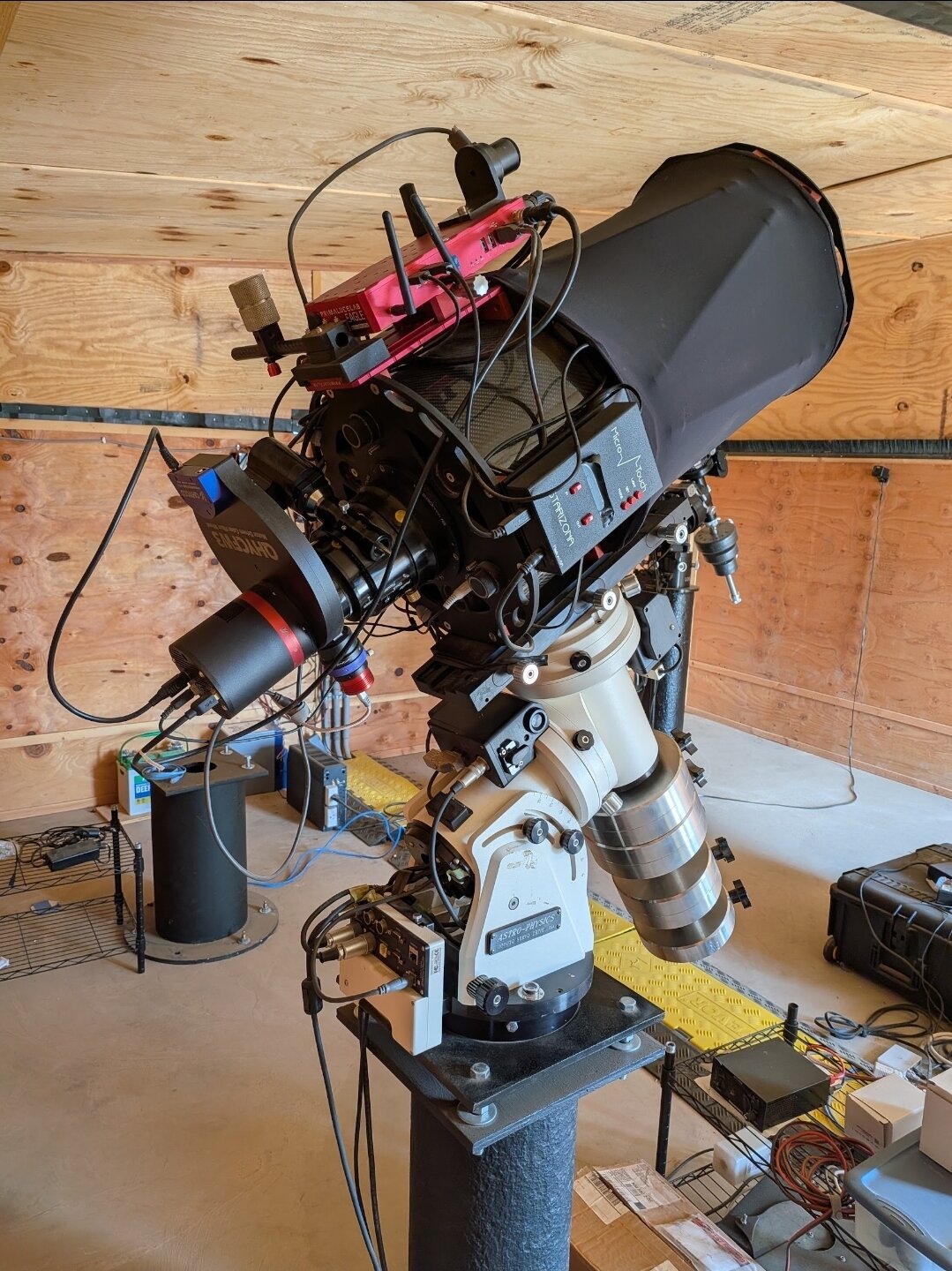
Used – Excellent Condition. A complete, turnkey remote imaging system built around a CFF Telescopes 250 mm f/8 Ritchey-Chrétien with premium Supremax 33 optics and an Astro-Physics 1100GTO-AE absolute-encoder mount. The rig is currently installed and in service at Astronomy Acres in Rodeo, New Mexico, and is sold in place — ready to image under some of the darkest skies in North America.
What's Included
- CFF Telescopes 250 mm f/8 Ritchey-Chrétien — carbon fibre truss OTA with hand-figured Supremax 33 optics, 2000 mm focal length, 3.2″ Starlight Instruments rack-and-pinion focuser
- Astro-Physics 1100GTO-AE German equatorial mount with absolute encoders
- Starizona Direct Drive Motor focus motor
- QHY268M cooled monochrome CMOS camera — 26 MP APS-C Sony IMX571 BSI sensor
- QHY filter wheel
- QHY OAG-M Pro off-axis guider
- Astrodon LRGB filter set, 50 mm
- Antlia 2″ narrowband filter set
- ZWO ASI174MM Mini guide camera
- PrimaLuceLab EAGLE5 PRO advanced control unit
- QHYCCD PoleMaster electronic polar alignment camera
- TS-Optics 0.8× Big Reducer
Location & Pier Lease
- The system is sold in place at Astronomy Acres, Rodeo, New Mexico — it is not being decommissioned or shipped as part of this sale.
- The pier lease is not included in the purchase price. The buyer arranges their own hosting agreement directly with Astronomy Acres, most recently quoted at approximately 500 USD per month. That rate is set by Astronomy Acres, not by Ontario Telescope, and is subject to change and to their acceptance.
- A buyer who would rather relocate the rig is free to do so at their own cost and arrangement.
Condition Notes
- Excellent condition throughout — the system has been operated in a hosted, climate-sheltered remote setting rather than transported between field sites.
- Sold as the equipment listed above only. Cabling, power distribution, dew control, pier top plate and mounting hardware, and any software licences are not included and remain with the seller.
- The pier itself and the hosting arrangement are the property of Astronomy Acres and do not transfer with the equipment.
About This System
This is a fully realised remote observatory payload of a kind that is very difficult to assemble today. Both of its cornerstone components are discontinued: CFF Telescopes ended production of the 250 mm Ritchey-Chrétien, and Astro-Physics discontinued the 1100GTO-AE in 2025. The CFF's hand-figured Supremax 33 primary in a carbon fibre truss chassis delivers the thermal stability and pinpoint stars that a 2000 mm imaging train demands, while the AP1100's absolute encoders reduce periodic error below 0.2 arcseconds and let the mount recover its exact position without a re-sync — the single most valuable trait a mount can have when you are operating it from two thousand kilometres away.
Behind the optics sits a matched, no-compromise imaging train: the 26 MP QHY268M mono camera with off-axis guiding through the QHY OAG-M Pro, Astrodon LRGB and Antlia narrowband filters, Starizona direct-drive focusing, and an EAGLE5 PRO running the whole rig over the network. Add the TS 0.8× reducer and the same scope becomes a wider f/6.4 instrument for larger targets. Assembled new today, the components in this list would represent roughly 35,000 USD before shipping and duty.
For a buyer who wants dark-sky imaging time rather than a construction project, this is about as close to turnkey as remote astrophotography gets.
Final Sale
This item is sold as a Final Sale. All used equipment sales are final, and the condition is described above in good faith. Please review our Used Equipment Sale Policy before purchasing.
Given the value and the in-place nature of this system, we recommend contacting us before purchase to arrange inspection, discuss the hosting handover with Astronomy Acres, and confirm payment and transfer logistics.
You may also like
Recently viewed
Recent Blog Posts
View all
Your Guide Graph Is Lying to You
Read More

D-Size vs V-Size: A Complete Guide to Telescope Dovetail Systems
Read More

What Is Back Focus in Astrophotography? Telescope Reducers, Flatteners, and Spacing Explained
Read More