
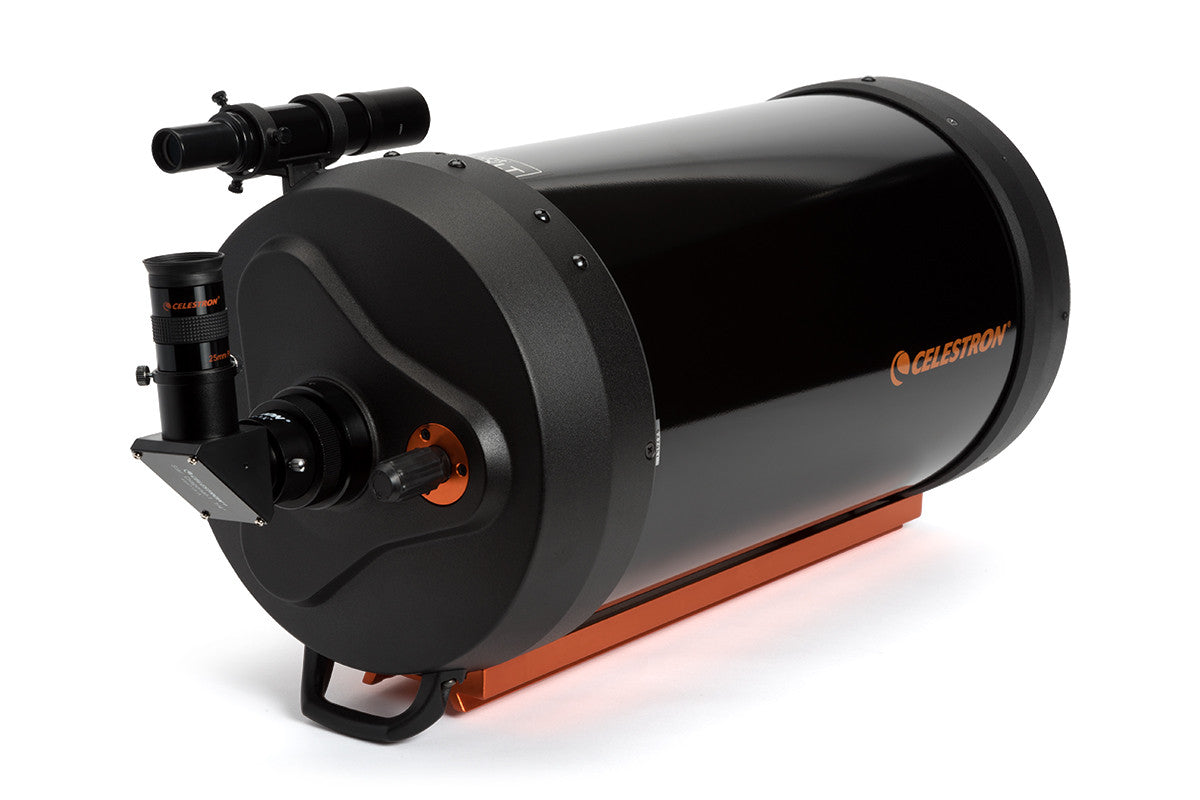


- Description
- Specifications
Product Overview
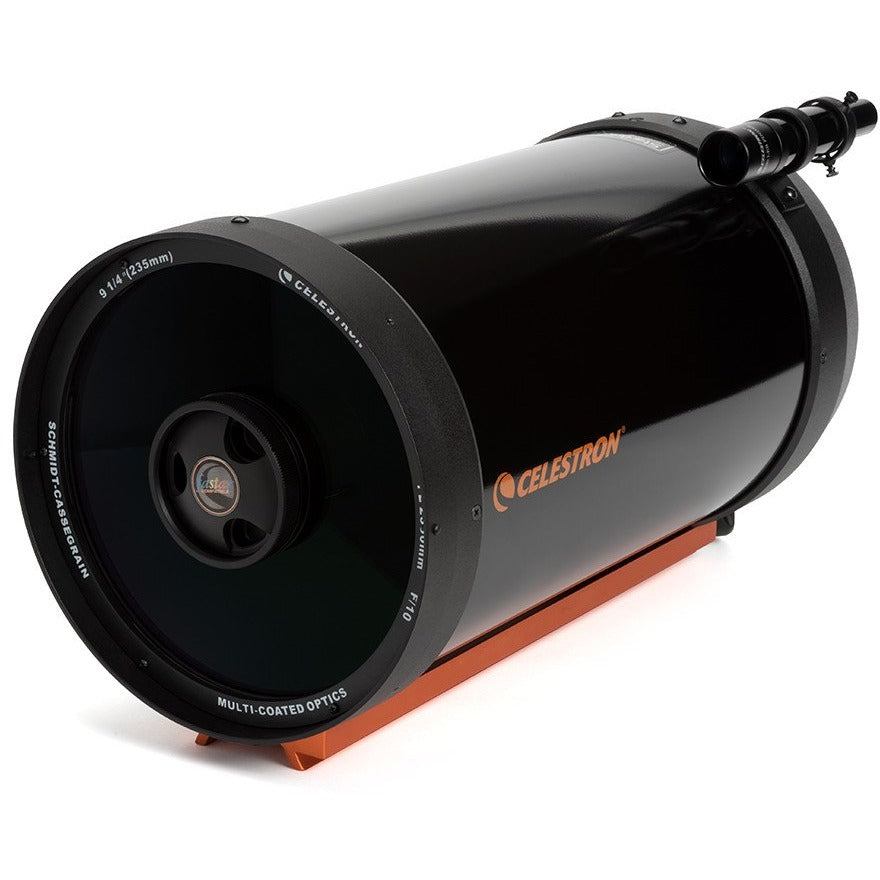
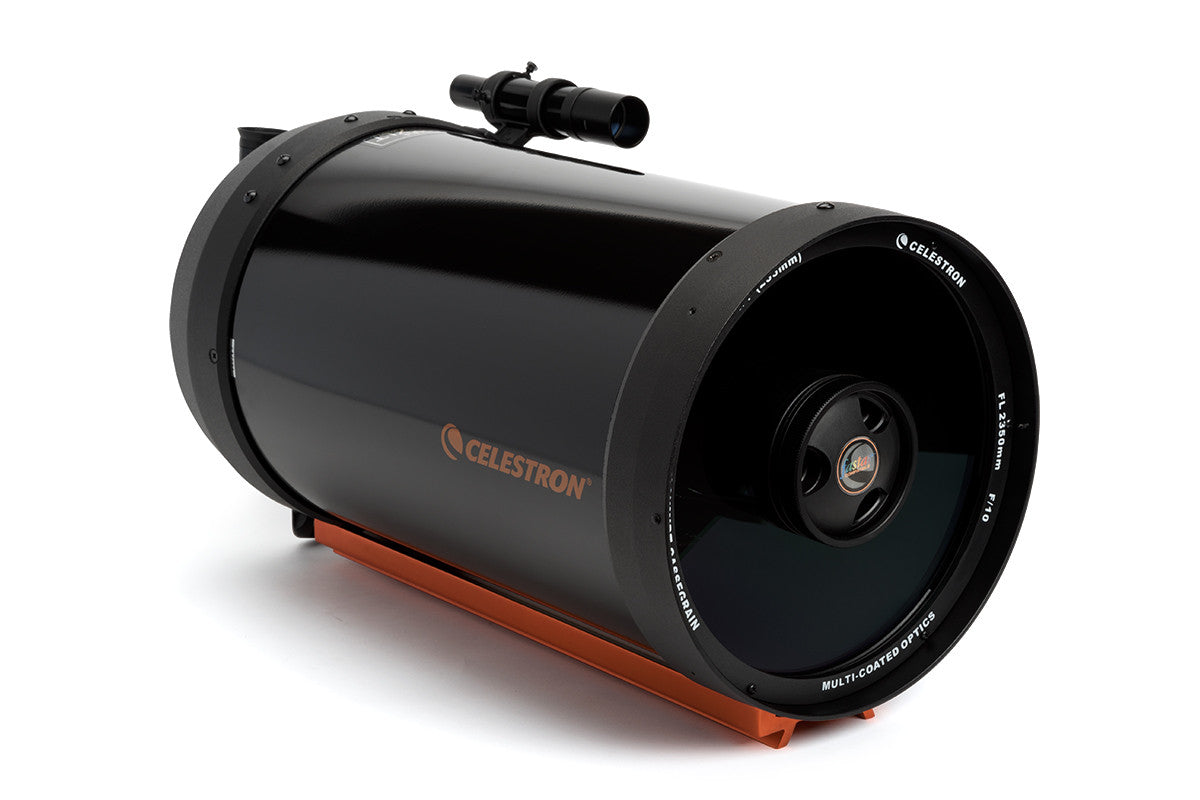
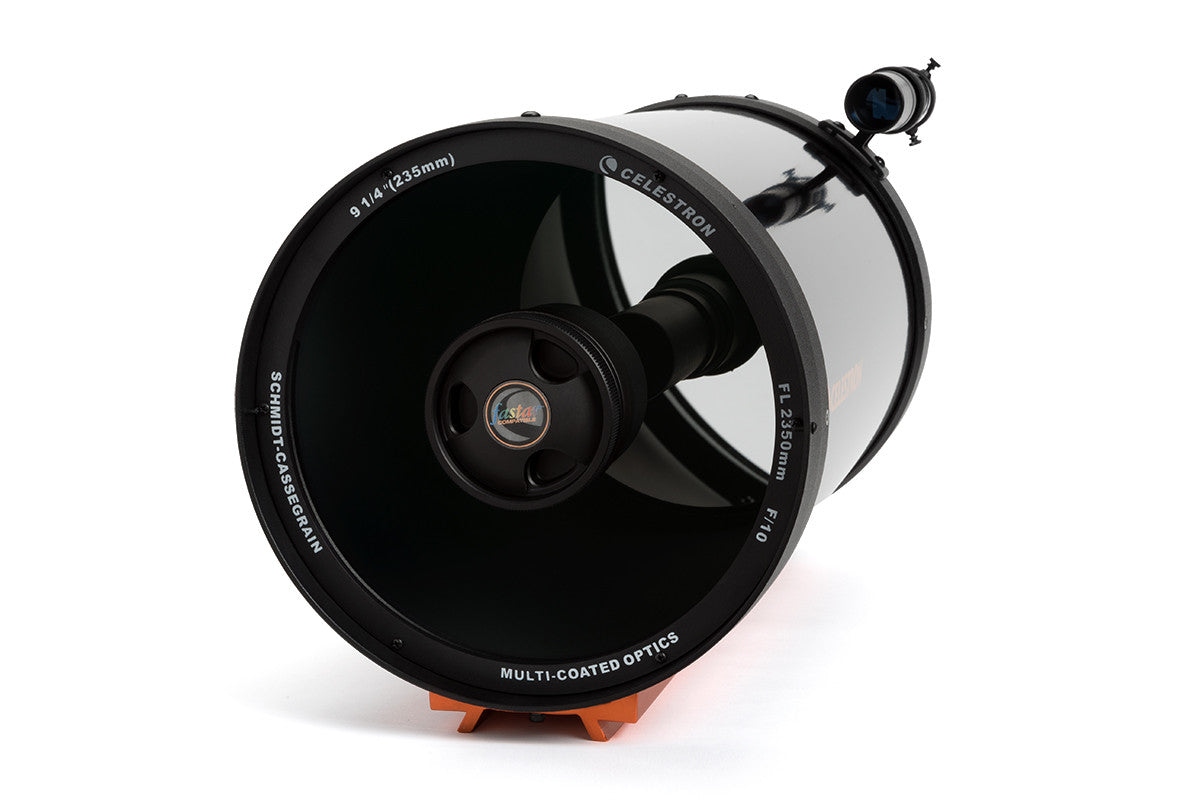
The Celestron C9.25 Optical Tube Assembly (CGE Dovetail) is a 9.25" (235 mm) Schmidt-Cassegrain optical tube built by Celestron, one of the most respected names in amateur astronomy. With a 2350 mm focal length operating at f/10, the C9.25 is widely regarded as the "Goldilocks" of Schmidt-Cassegrain tubes — large enough to deliver striking high-resolution views of the Moon, planets and deep-sky objects, yet compact enough at just 22" long and 20 lbs to remain genuinely portable. The tube carries Celestron's patented StarBright XLT optical coatings for maximum light transmission and is Fastar compatible for fast f/2 wide-field imaging.
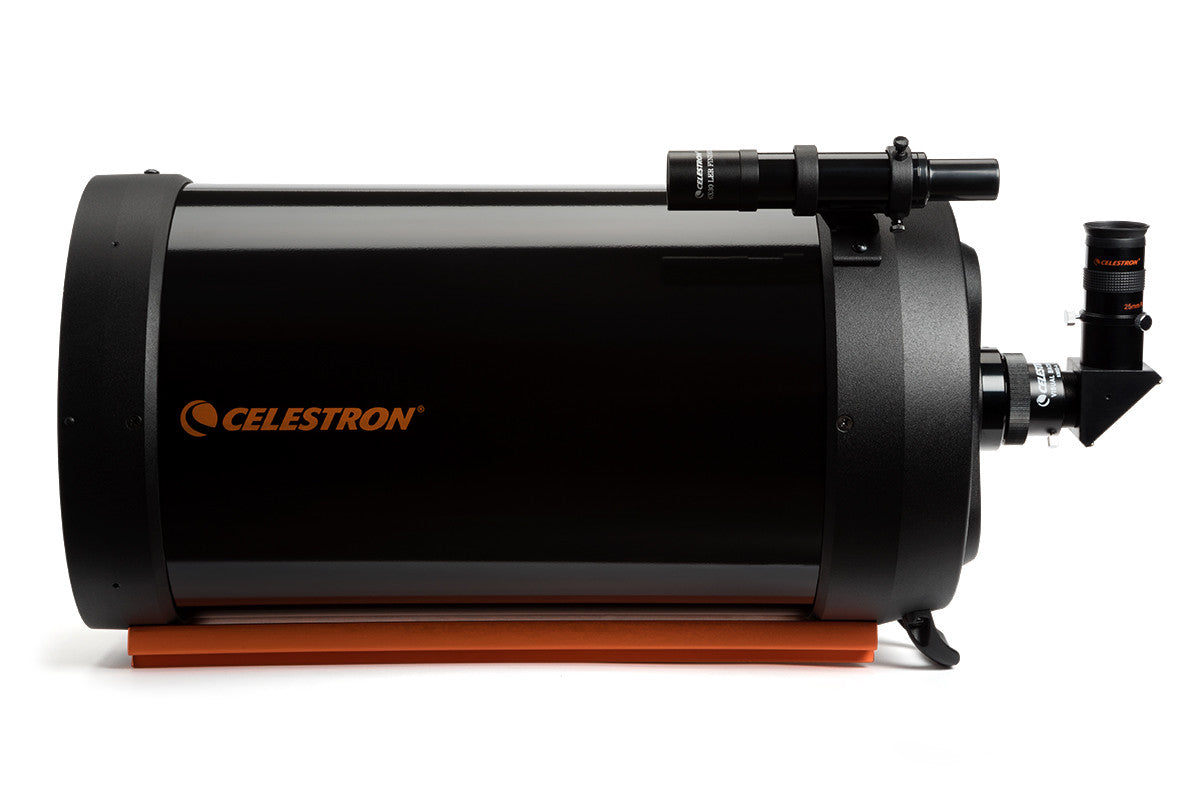
It ships ready to mount on a CGE-style (Losmandy-style) dovetail and includes a 25 mm eyepiece (94x), a 6x30 finderscope, a 1.25" star diagonal and a 1.25" visual back.
Who Is This Product Best For?
The C9.25 suits intermediate to advanced amateur astronomers who want serious aperture in a transportable package. Visual observers will appreciate the high-contrast planetary and lunar views, while planetary and lunar imagers benefit from the long native focal length. With the optional Fastar/HyperStar conversion it also becomes a fast deep-sky astrograph, making it a flexible choice for imagers who want one tube that does both. It is not aimed at absolute beginners, who are usually better served by a complete computerized telescope package.
Why Choose This Product?
- Legendary C9.25 optics — the slower internal primary gives this tube a reputation for sharp, high-contrast planetary performance.
- StarBright XLT coatings deliver up to 97.4% light transmission for brighter images and shorter exposures.
- Fastar compatible — remove the secondary and add a third-party HyperStar lens to image at roughly f/2, about 25x faster than native f/10.
- Portable — 22" long and just 20 lbs, easy to transport and quick to set up.
- CGE / Losmandy-style dovetail mounts on a wide range of computerized equatorial and alt-az mounts.
- Versatile f/10 platform — equally at home for visual use, planetary imaging or, with a reducer, wider deep-sky work.
Recommended Uses
- High-resolution visual observing of the Moon, planets and double stars
- Planetary and lunar imaging with a dedicated planetary camera
- Deep-sky visual observing of galaxies, nebulae and clusters under dark skies
- Deep-sky astrophotography at f/10 with an optional reducer/corrector
- Ultra-fast wide-field imaging via an optional Fastar/HyperStar conversion
- Adding high-magnification reach to a capable existing equatorial mount
Compatibility and Accessory Notes
- Mount: Ships with a CGE-style (Losmandy D-style) dovetail bar; mounts on Celestron CGEM/CGX-class and most Losmandy-compatible equatorial and alt-az mounts.
- Rear cell: Standard Celestron 2" SCT rear thread accepts SCT visual backs, T-adapters, focal reducers and SCT-thread accessories.
- Imaging: Compatible with the Celestron Reducer/Corrector for f/6.3 deep-sky imaging and with third-party SCT correctors for flatter, faster fields.
- Fastar / HyperStar: Fastar compatible — accepts a third-party HyperStar lens (sold separately) for f/2 imaging.
- Included: 25 mm eyepiece (94x), 6x30 finderscope, 1.25" star diagonal, 1.25" visual back, CGE dovetail bar.
- Mounting load note: Celestron recommends no more than a 25 lb load placed about 4.2" from the 9.25" Schmidt corrector.
Important Limitations
- This is an optical tube only — no mount or tripod is included. A sturdy, suitably rated mount is required.
- The long ~2350 mm focal length at f/10 makes a precise equatorial mount and good guiding essential for deep-sky astrophotography.
- Fastar/HyperStar imaging requires a separately purchased HyperStar lens and a compatible camera.
- Not the ideal first telescope for a complete beginner who wants a ready-to-use computerized package.
- As a closed-tube SCT, it benefits from a dew shield and/or dew heater in humid conditions (sold separately).
Frequently Asked Questions
Is the C9.25 good for beginners? It is better suited to intermediate and advanced users. Beginners can use it successfully but will need to add a capable mount and learn alignment and collimation.
What is it best used for? It excels at high-resolution visual observing and planetary/lunar imaging, and adapts well to deep-sky imaging with the right accessories.
Is it for visual observing or astrophotography? Both. Native f/10 is ideal for visual and planetary work; add a reducer for f/6.3 deep-sky imaging or a HyperStar for fast f/2 wide-field imaging.
What mount do I need? A computerized equatorial mount rated comfortably above the 20 lb tube weight (plus accessories), such as a Celestron CGEM II / CGX-class mount, is recommended for imaging.
Does it need extra accessories? For imaging you will typically add a T-adapter or focal reducer/corrector and a camera. Visual use works out of the box with the included eyepiece, diagonal and finder.
What makes it different from the C8 or C11? The C9.25's unique slower internal primary mirror gives it a reputation for exceptionally sharp planetary contrast, while staying lighter and more portable than the C11.
When should it not be recommended? Avoid it if you need a turnkey beginner setup, want ultra-wide-field views, or cannot pair it with a sufficiently sturdy mount.
Our Recommendation
At Ontario Telescope and Accessories, we consider the C9.25 one of the best all-round Schmidt-Cassegrain tubes Celestron makes. It is our pick for the observer or imager who wants standout planetary resolution and real deep-sky reach without stepping up to the size and weight of a C11. Pair it with a solid computerized equatorial mount and it will serve for years across visual, planetary and deep-sky work. If you are a first-time buyer looking for a simple grab-and-go scope, or you primarily want wide-field views, a smaller SCT or a refractor will be an easier fit.
| Product Type | Schmidt-Cassegrain Optical Tube Assembly (OTA) |
|---|---|
| Optical Design | Schmidt-Cassegrain |
| Aperture | 235 mm (9.25") |
| Focal Length | 2350 mm (93") |
| Focal Ratio | f/10 |
| Optical Coatings | StarBright XLT |
| Included Eyepiece | 25 mm (94x) |
| Finderscope | 6x30 |
| Star Diagonal | 1.25" |
| Visual Back | 1.25" |
| Highest Useful Magnification | 555x |
| Lowest Useful Magnification | 34x |
| Limiting Stellar Magnitude | 14.4 |
| Resolution (Rayleigh) | 0.59 arcsec |
| Resolution (Dawes) | 0.49 arcsec |
| Light Gathering Power | 1127x (vs. human eye) |
| Secondary Mirror Obstruction | 85 mm (3.35") — 36% diameter / 13% area |
| Optical Tube | Aluminum |
| Optical Tube Length | 559 mm (22") |
| Optical Tube Diameter | 271.78 mm (10.7") |
| Optical Tube Weight | 20 lbs (9.07 kg) |
| Dovetail | CGE Dovetail Bar (Losmandy-style) |
| Fastar Compatible | Yes (f/2 with optional HyperStar) |
| Primary Use | Visual, planetary & lunar imaging, deep-sky imaging |
You may also like
Recently viewed
Recent Blog Posts
View all
Your Guide Graph Is Lying to You
Read More

D-Size vs V-Size: A Complete Guide to Telescope Dovetail Systems
Read More

What Is Back Focus in Astrophotography? Telescope Reducers, Flatteners, and Spacing Explained
Read More