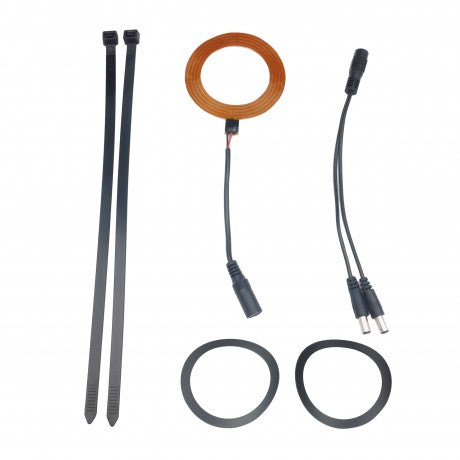
Anti-dew heater strip

ZWOSKU: ZWO-DEW

Price:
Sale price$27.00 CAD
Stock:
In stock Qty: 2
  • Description

Product Description

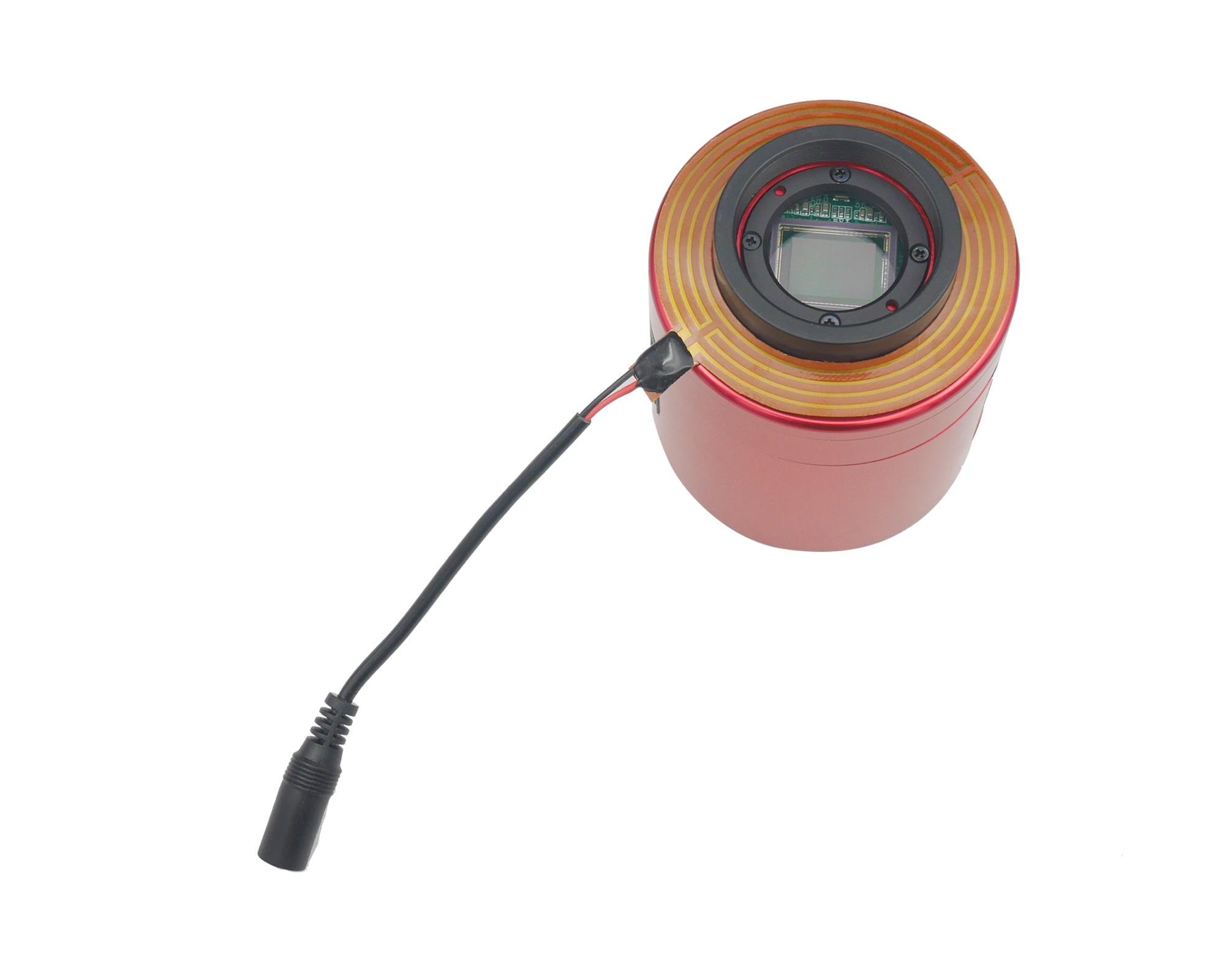
The anti-dew heater strip is used for anti-dew on the front window of the ASI cooled cameras.

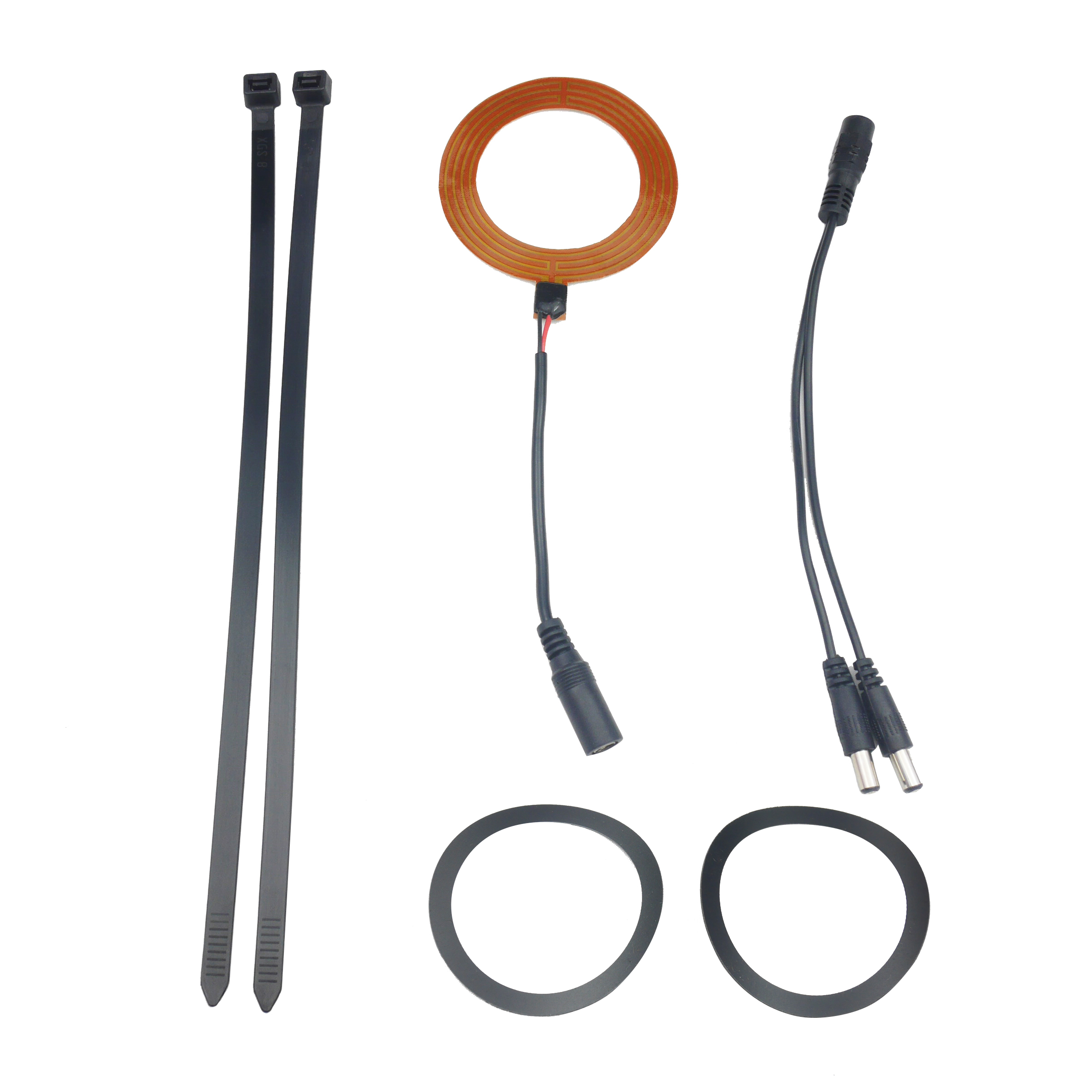
This kit includes the zip-tie, anti-dew heater strip , an Y power cord and two spacers
Anti-dew-Kit-NEW

The thickness of the anti-dew heater strip is 0.2~0.3mm.

The Y power cord is designed to connect in-line with the cooler power supply for convenience.

The thickness of the spacers is 0.3mm and 0.5mm. They are used for aligning the camera and EFW.

And we recommends 12V at 0.35A DC adapter where the heating power on the strip is ~4.2 watts. You can use one and same power cord to power both the fan and heater simultanously, but make sure not to exceed recommended amount of Ampere.

How to use it?

  1. Tear out the protective film on adhesive tape
Anti-dew-theback0
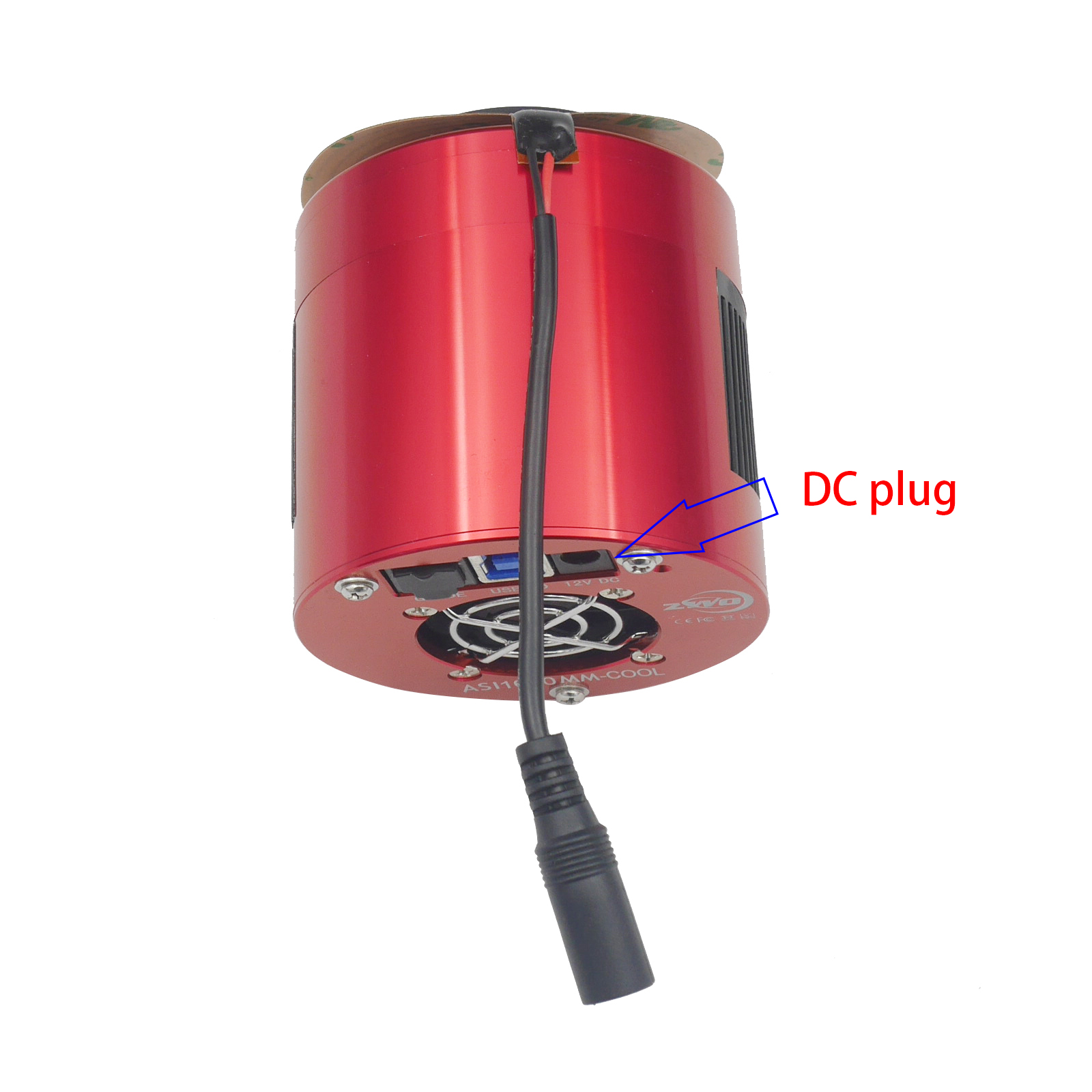
2. Put the anti-dew heater strip on the front facing of the camera and make sure the black cable is in the right position (lining next to the DC plug at the rear end)

Anti-dew-step2

Anti-dew-step2.2

3. Tie the black cable with a zip-tie on the camera body.Anti-dew-step4

4. Plug in the power cord, then everything is done.

Anti-dew-step5

Anti-dew-step6.1

Now you should be dew-free while shooting with the camera.

You may also like

Recently viewed

Recent Blog Posts

View all
Guide scope or off-axis guider: a PHD2 guide graph reporting 0.41 arcsecond RMS beside elongated stars from the same night

Your Guide Graph Is Lying to You

astrophotography Stephen Mallia
You drove ninety minutes to dark sky, PHD2 held 0.4 arcseconds all night, and half your subs still have eggs for stars. Here are the three things your

Read More
V-size Vixen and D-size Losmandy dovetail bar profiles compared to scale, about 44 mm against 75 to 84 mm

D-Size vs V-Size: A Complete Guide to Telescope Dovetail Systems

Stephen Mallia
What's the difference between D-size and V-size telescope dovetails? Here's everything you need to know.

Read More
A 55 mm back focus imaging train: spacer 16.5 mm, filter drawer 21 mm and camera sensor depth 17.5 mm, measured from the rear of the reducer

What Is Back Focus in Astrophotography? Telescope Reducers, Flatteners, and Spacing Explained

Stephen Mallia
What Is Back Focus in Astrophotography? Telescope Reducers, Flatteners, and Spacing Explained Back focus is one of those astrophotography terms that c

Read More