
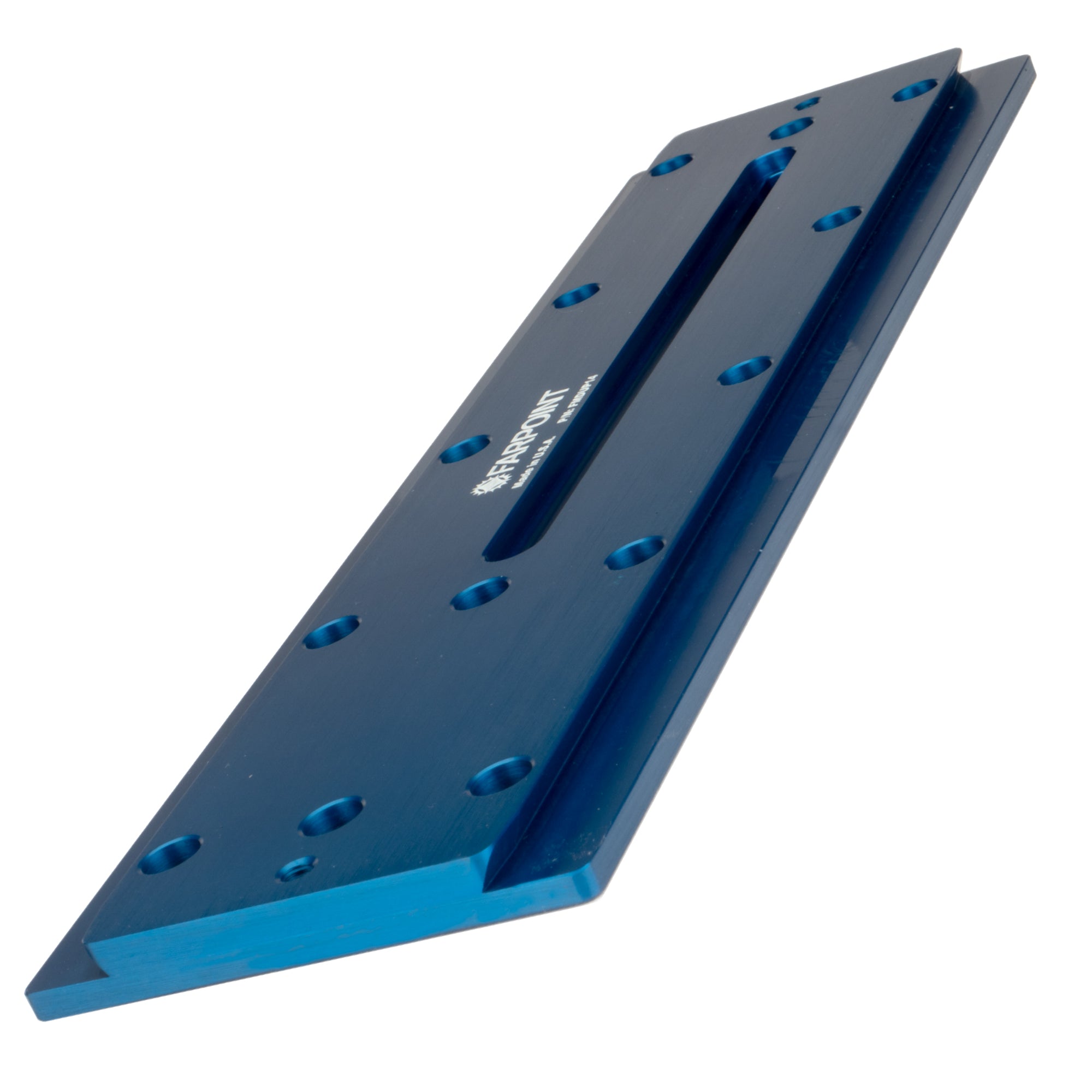
If you've ever stared at a spec sheet wondering whether your mount needs a "Vixen" or a "Losmandy" dovetail, you're not alone — it's one of the most common questions we hear from new imagers and visual observers alike. The good news: once you understand what a dovetail actually does, picking the right one is straightforward. Here's everything you need to know.
What does a telescope dovetail system actually do?
A dovetail is a precision-machined rail-and-clamp connection. The bar (sometimes called a plate) has angled edges that slide into a matching saddle and lock down with a clamping screw or lever — no tools required. That one mechanical joint handles two separate jobs on your setup.
1. It mounts your telescope to your mount
A dovetail bar bolts to the underside of your optical tube, and the saddle bolts to your mount's head. Slide the bar into the saddle, tighten the clamp, and the telescope is mounted. Loosen it and the scope comes free in seconds. Because this is the single connection between your optics and the sky, how tight and rigid that joint is has a direct effect on what you see and what you capture — a loose or undersized dovetail shows up as star trailing in long exposures, slow-to-settle vibration after every focus adjustment, and softer detail at the eyepiece.
2. It lets you build out your rig
Most telescopes carry a bar on the bottom of the tube for mounting, and many also carry a second bar along the top — often called an accessory bar. That second rail is where the rest of your gear attaches: an adapter plate clamps onto it and becomes a mounting point for a guide scope, finder, camera, or piggyback lens. Adapter plates come two ways — bare plates drilled with a grid of holes so you can configure your own setup, and pre-configured plates that already carry hardware like a guide ring or ball head.
D-size vs V-size: which one do you need?
Dovetail hardware is machined to one of two widths, and they don't cross over — a V-size bar will never lock into a D-size saddle, and a D-size bar will never fit a V-size saddle.
| V-size (Vixen) | D-size (Losmandy) | |
|---|---|---|
| Width | ~44 mm (about 1.75″) — narrow | ~75–84 mm (about 3″) — wide |
| Rigidity & vibration control | Good for light loads | Best — wide clamping surface resists flex and damps vibration fastest |
| Best for | Small refractors, grab-and-go rigs, visual observing | Imaging setups, SCTs, and any scope where stability is the priority |
| Load capacity | Lighter optical tubes and accessories | Higher — built to carry heavy imaging trains |
| Typically found on | Entry-level and mid-range mounts | Mid-to-heavy-duty equatorial mounts |
Rigidity matters more than almost any other spec in a telescope system. A flexed or undersized connection shows up immediately as elongated stars in long exposures and a longer wait for vibration to settle after every touch of the focuser. Because a wider dovetail spreads clamping force across more surface area, D-size hardware resists twist and flex noticeably better than V-size — which is why imagers reach for it even on telescopes light enough to ride comfortably on a V-size bar.
Our take: if your mount accepts a D-size saddle, we'd default to D-size hardware even for a small apo refractor — the added stiffness pays off in rounder stars and a calmer view at the eyepiece. Stick with V-size when your mount only has a Vixen-style saddle, when minimizing weight for a grab-and-go setup is the priority, or for casual visual sessions where the difference won't be noticeable.
Not sure which you have? Measure the base of the bar already on your scope: a V-size bar is roughly an inch and three quarters wide; a D-size bar is closer to three inches across. Several higher-end mounts now ship with a dual-width saddle that clamps either size — check your mount's documentation if you're unsure.
The parts of a dovetail system
New to the system? Here's a quick glossary of what each component does.
- Dovetail bars & plates
- The rail that bolts to the telescope tube and slides into the saddle. Available as fixed-length bars or universal multi-hole plates that fit a range of tube diameters.
- Saddles
- The clamp mounted to your telescope mount that receives the bar. Most use a screw clamp or lever clamp; some mounts offer dual-width saddles that accept both V-size and D-size bars.
- Adapter plates
- Clamp onto an existing dovetail bar to add a second mounting point for a camera, guide scope, or finder. Available bare (drilled with a hole pattern) or pre-configured with hardware already installed.
- SCT dovetail kits
- A matched bar-and-radius-block kit sized to a specific Schmidt-Cassegrain telescope. The radius blocks cradle the curved tube while the bar bolts to the front and rear cells; most SCTs need both an upper and a lower bar.
- Guide scope & finder rings
- Rings that clamp around a guide scope or finder and bolt to an adapter plate, letting you carry a second optical instrument alongside your main telescope.
- Counterweights & specialty plates
- Counterweights balance a heavy imaging train on the opposite side of the mount; specialty and clamshell plates handle odd tube shapes and one-off mounting jobs.
Frequently asked questions
What does a telescope dovetail system actually do?
It does two things: locks your optical tube to your mount through a bar-and-saddle connection, and gives you a mounting point — usually a second bar plus an adapter plate — for guide scopes, cameras, and finders.
What's the difference between D-size and V-size dovetails?
Width and rigidity. V-size (Vixen) bars are about 1.75″ (44 mm) wide; D-size (Losmandy) bars are about 3″ wide. The wider D-size connection is stiffer and damps vibration faster, while V-size is lighter and more common on entry-to-mid-range mounts. A bar only fits its matching saddle size.
Which dovetail size does my telescope need?
It's determined by your mount's saddle, not your scope. Check what your mount accepts — if it takes a D-size saddle, we'd lean toward D-size hardware for the rigidity benefit, even on a smaller telescope. Choose V-size if your mount only has a Vixen-style clamp, or if minimizing weight is the priority.
How do I add a guide scope or camera to my telescope using a dovetail?
With an adapter plate that clamps onto an existing dovetail bar on your tube. Bare adapter plates have a grid of holes so you can bolt on your own hardware; pre-configured plates arrive with a guide ring, ball head, or camera adapter already fitted.
What's included in an SCT dovetail kit?
A bar and a matched pair of radius blocks sized to your specific SCT model (Celestron or Meade). The radius blocks cradle the curved tube and the bar bolts to the cells; most SCTs need an upper and a lower bar, sold separately by model and by size standard.
Is D-size overkill for a small telescope?
Not if rigidity matters to you. The stiffness advantage of a wider dovetail shows up even on light imaging refractors — rounder stars and faster vibration settle-time after every focus adjustment or wind gust. D-size is the obvious call for SCTs and heavy imaging trains, but it's worth it on smaller scopes too if your mount supports it.
Can I use a V-size telescope on a D-size mount, or the reverse?
Yes, with an adapter saddle or adapter plate built to bridge the two standards.
Which brands of dovetail hardware does Ontario Telescope carry?
We stock dovetail bars, saddles, plates, and rings from leading manufacturers including Farpoint, ADM, Losmandy, William Optics, and Explore Scientific, in both D-size and V-size standards.
Shop the full lineup
We've just stocked our shelves with the complete Farpoint dovetail catalog — bars, saddles, adapter plates, rings, radius blocks, and counterweights in both D-size and V-size. Browse the full collection here, or get in touch if you're not sure which hardware matches your mount and telescope.