
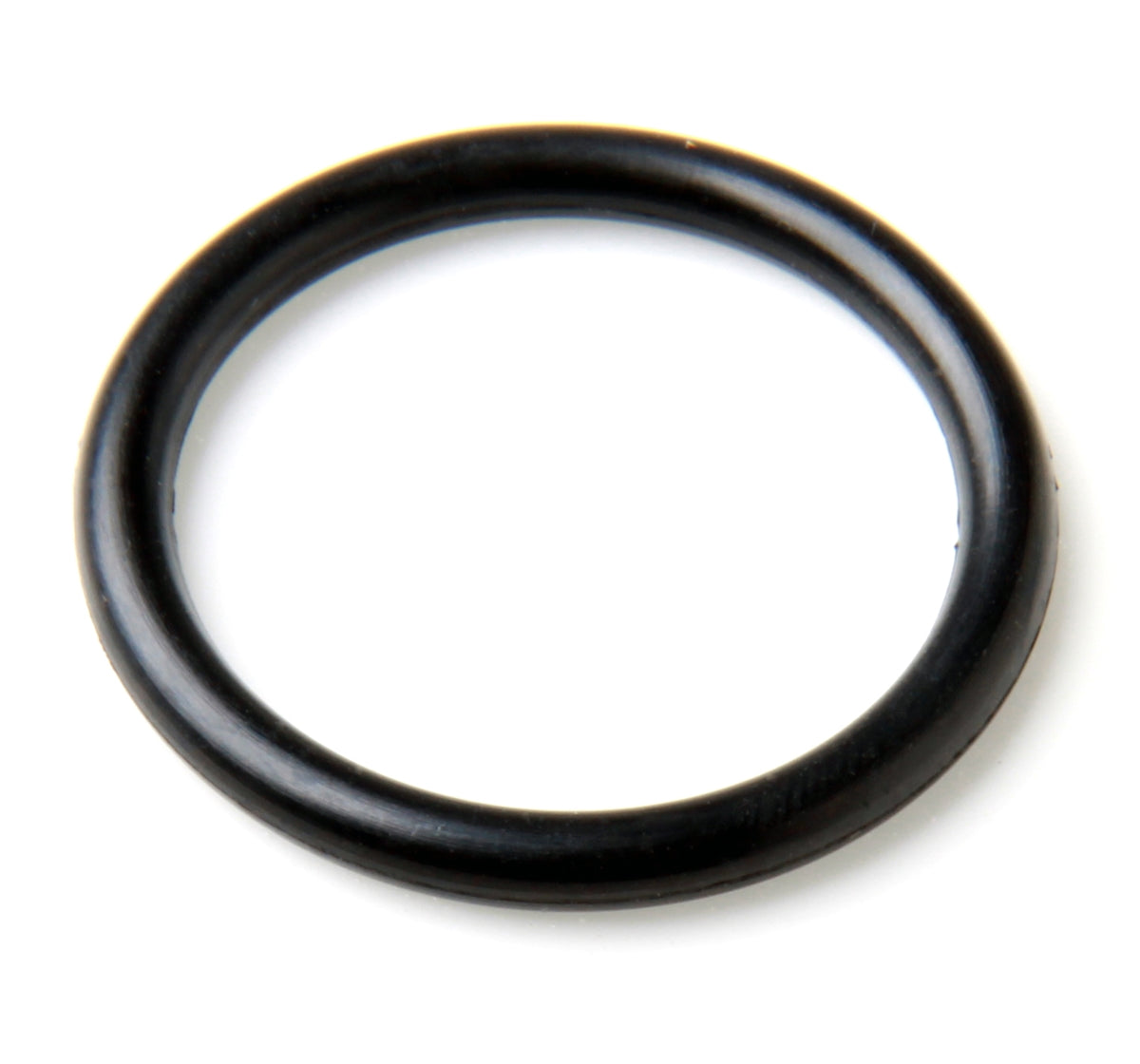

- Description
Orings are used to stop First Contact Polymer flow on or under optic retaining rings (or retaining flanges if retained from backside). NOTE: Retaining rings sometimes do not fit sufficiently tight to the optic to disallow polymer from wicking under the ring. Once under a retaining ring the polymer will not pull out and will tear, leaving residue under the ring. Additionally, some retaining rings are plastic and are incompatible with the solvents in First Contact polymer so contact must be avoided.
These are chemical resistant orings that do not swell when in contact with the polymer. Do not use cheap Butyl or Buna orings, they will absorb solvents, swell and can break down leaving residue.
NOTES: 1. If the orings are not flat when received and do not lay flat on your optic you can lay on a flat surface and apply mild heat with a heat gun and the orings will flatten. Allow to cool then apply to your optic! 2. The oring may trap a very thin layer of polymer underneath and leave polymer residue when peeled. This possible situation can be avoided by coating one side of the oring with polymer (or dipping), and once dry you can set in place and use per directions.
You may also like
Recently viewed
Recent Blog Posts
View all
Your Guide Graph Is Lying to You
You drove ninety minutes to dark sky, PHD2 held 0.4 arcseconds all night, and half your subs still have eggs for stars. Here are the three things your
Read More
Read More

D-Size vs V-Size: A Complete Guide to Telescope Dovetail Systems
What's the difference between D-size and V-size telescope dovetails? Here's everything you need to know.
Read More
Read More

What Is Back Focus in Astrophotography? Telescope Reducers, Flatteners, and Spacing Explained
What Is Back Focus in Astrophotography? Telescope Reducers, Flatteners, and Spacing Explained
Back focus is one of those astrophotography terms that c
Read More
Read More