



- Description
- Specifications
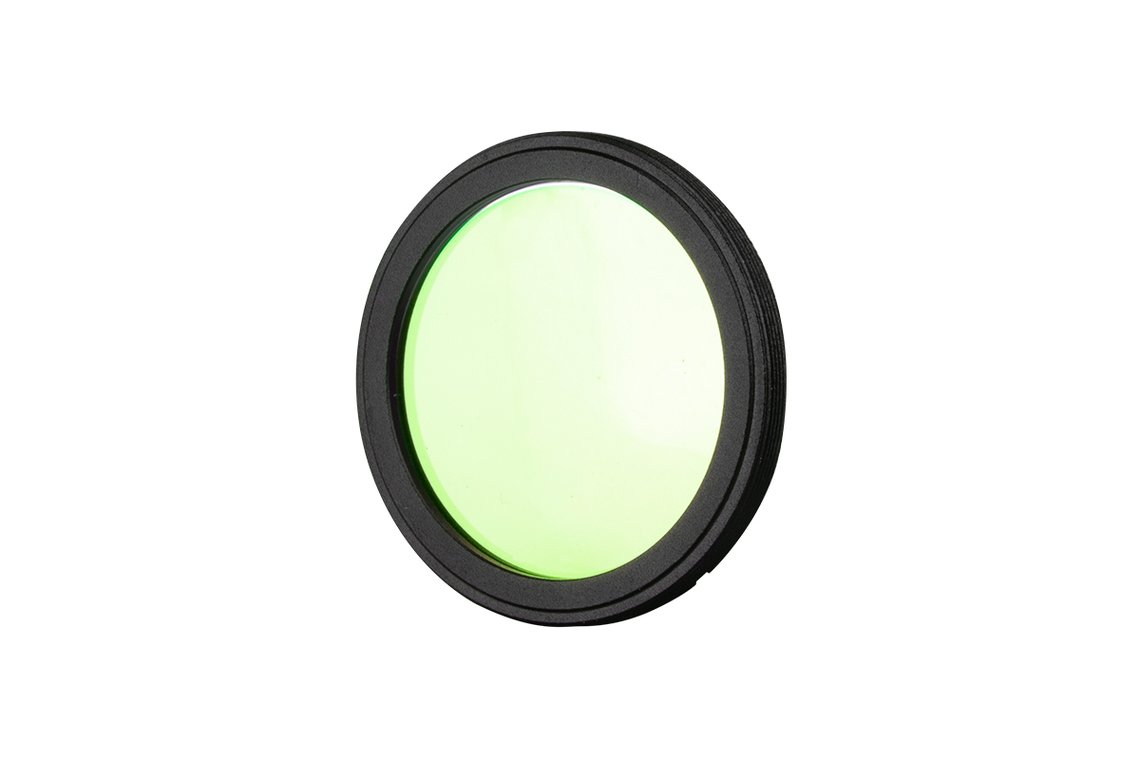
Light pollution in the night sky can significantly degrade contrast in astronomical images. This is especially true when using very fast telescopes like the 8” RASA because the sky background saturates very quickly. The “noise” of the light pollution overwhelms the “signal” from the celestial object you are imaging, making it difficult to get the most detailed image. The Light Pollution Imaging Filter for the 8” RASA remedies this by blocking light pollution while transmitting light from deep-sky objects. The result is bright, detailed objects that pop off the black sky background with superior contrast.
Fortunately, many sources of light pollution have relatively discreet emission spectra; they emit primarily at specific wavelengths of light. By strategically blocking these wavelengths, the filter greatly reduces the effects of light pollution without degrading overall image quality.
The Light Pollution Imaging (LPI) Filter for the 8” RASA blocks light from some of the most common sources of light pollution between 400-700nm (i.e., the visible spectrum), including high- and low-pressure sodium-vapor streetlights, mercury-vapor streetlights, and natural airglow caused by oxygen in the atmosphere. Unlike some light pollution filters, the LPI filter blocks only specific areas of the spectrum instead of wide regions. This helps to maintain image brightness and color balance. In addition, specific wavelengths associated with emission nebulae, such as H-a(656nm), H-ß (486nm), OIII (496nm and 501nm), and SII (672nm), are highly transmitted, ensuring minimal loss of image brightness for those objects.
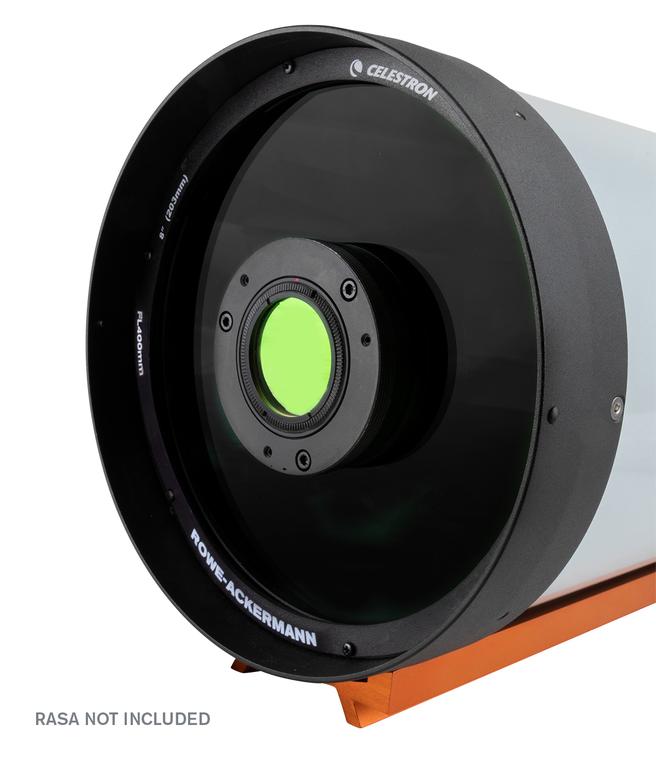
The filter fits directly into the internal filter mount in the RASA 8’s front lens cell, where the optical window normally mounts. By removing the clear window and replacing it with the filter, optical performance for the entire system is maintained.
Each filter comes with a plastic storage case to safely store the filter or the placeholder glass that came with your RASA when not in use. You will also receive a spectral transmission graph unique to your specific unit, verifying its performance.
| Material | Schott B270 |
| Glass thickness | 1.9 mm |
| Filter diameter | 46 mm |
| Clear aperture | 43 mm |
| Coatings | Dichroic, multi-layer anti-reflection |
| Housing | Aluminum, black anodized |
You may also like
Recently viewed
Recent Blog Posts
View all
Your Guide Graph Is Lying to You
Read More

D-Size vs V-Size: A Complete Guide to Telescope Dovetail Systems
Read More

What Is Back Focus in Astrophotography? Telescope Reducers, Flatteners, and Spacing Explained
Read More